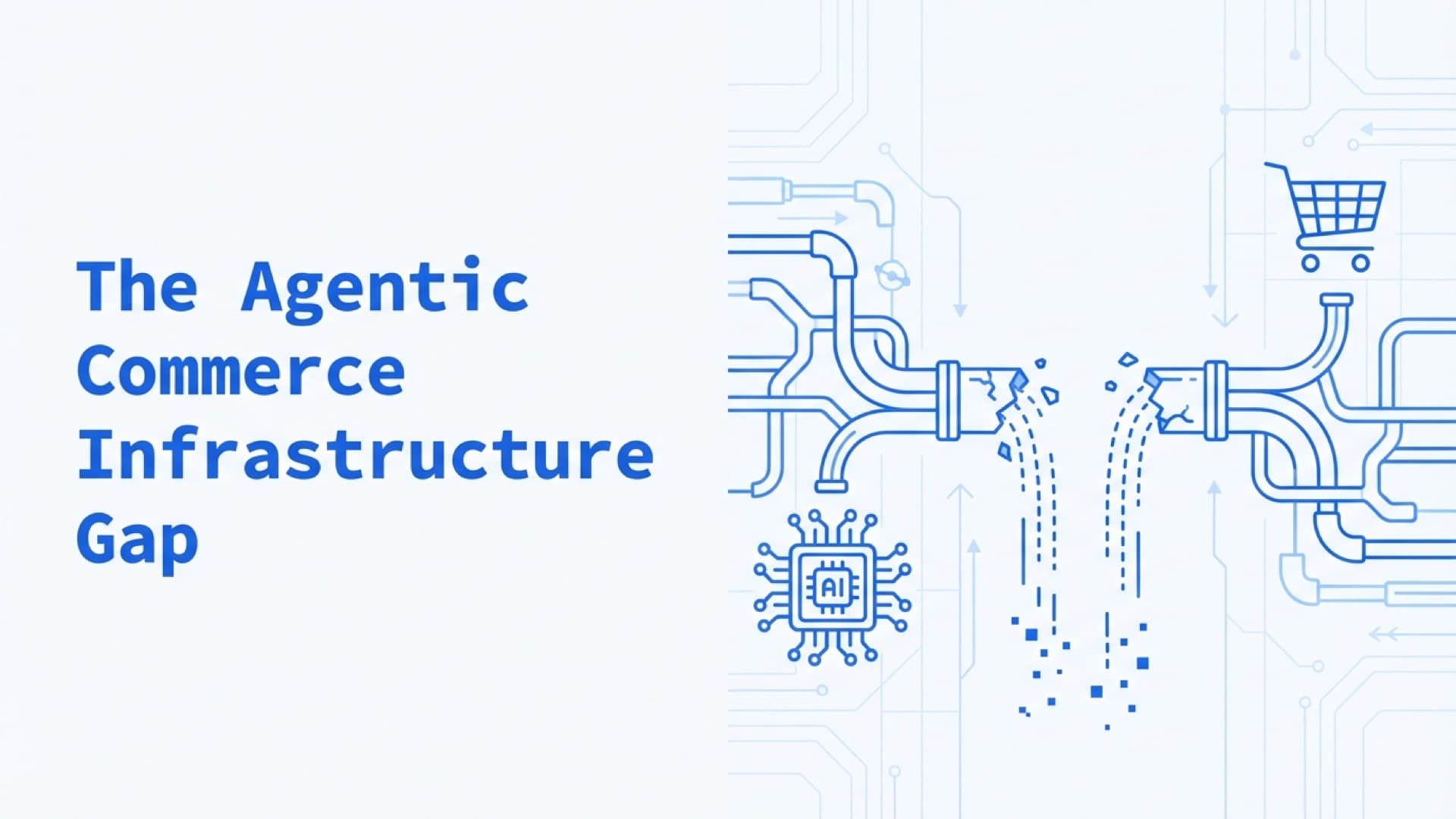
The Agentic Commerce Infrastructure Gap No One's Closing
 Eugene Levitin·
AI shopping traffic to US retail sites surged 1,200% between July 2024 and February 2025, according to Adobe. Orders attributed to AI searches jumped 11x since January 2025 on Shopify alone, according to the company's Q3 earnings call. Morgan Stanley projects that AI shopping agents could account for up to $385 billion in US e-commerce spending by 2030.
And then there's this number: affiliate links are 86% more likely to convert than referrals from ChatGPT.
I've been digging into the agentic commerce numbers for weeks now. Every report leads with the growth story — the traffic explosion, the billion-dollar projections, the protocol launches. But when you line up the traffic data against the conversion data, there's a gap that nobody seems to be explaining.
The traffic is real. The money isn't following. That disconnect is the most important thing happening in ecommerce right now.
What's Actually Happening Right Now
The infrastructure for AI shopping is being built at an unprecedented pace. In the span of a few months, from late 2025 to early 2026:
Walmart and Target announced checkout inside Google Gemini — shoppers will be able to browse inventory and buy without visiting either retailer's website. ChatGPT launched Instant Checkout with Etsy, powered by the Agentic Commerce Protocol (ACP), with over 1 million Shopify merchants coming soon. Microsoft's Copilot Checkout began rolling out with PayPal, Shopify, and Stripe. Google's AI Mode now has over 75 million daily active users and shopping ads placed directly in AI conversations.
These aren't pilot programs. Visa and Mastercard both launched agent-specific payment protocols. Shopify's Winter '26 Edition introduced "Agentic Storefronts": one setup in the Shopify admin to sell on ChatGPT, Perplexity, and Microsoft Copilot. At NRF 2026, a live audience poll at Stripe's agentic commerce session found almost 75% of attendees were either implementing or actively planning agentic commerce initiatives.
The supply side is being built. Fast.
The Numbers That Don't Add Up
Here's where things get interesting. According to eMarketer, AI-platform-driven ecommerce will be $20.9 billion in 2026 — nearly quadruple 2025. That sounds massive until you realize it's 1.5% of total retail ecommerce. By 2029, they project $144 billion, or 8.8% of total.
But the conversion data tells a different story than the traffic data.
Adobe Analytics measured an 805% year-over-year jump in AI traffic to US retail sites on Black Friday 2025, according to Retail Dive, and that day shoppers arriving from an AI service were 38% more likely to convert. Over the full holiday season, AI referrals converted 31% more than other traffic sources, nearly doubling year-over-year, according to Adobe.
Sounds great — until you look at where people are actually completing purchases. According to a study by Kaiser and Schulze analyzing 973 ecommerce sites with $20 billion in combined revenue, ChatGPT referral traffic is roughly 200x smaller than organic Google traffic. In the same study, affiliate links were 86% more likely to convert than ChatGPT referrals.
So AI traffic converts better than average for some metrics, but dramatically worse for others. What's going on?
The Trust Gap Explains Everything
The answer is trust — or more precisely, the lack of it.
According to Salsify's 2026 Consumer Research covering the US, UK, and Canada, only 14% of shoppers trust AI recommendations alone to make a purchase. Just 14%. Another 27% trust AI shopping tools for some purchases but verify with other sources, and a third don't use them at all.
Bain's data tells a similar story. Only 10% of consumers have actually bought something using AI, mostly small-ticket grocery items and household goods. According to ChannelEngine's marketplace shopping behavior report, 58% of shoppers have used AI tools to research products, but only 17% feel comfortable purchasing directly through AI today.
This is what I've started calling the verification tax. For every minute AI saves you in product research, you spend another minute checking its work. The net time savings approaches zero for anything you actually care about.
The IBM-NRF study surveyed over 18,000 respondents across 23 countries. 72% still shop in stores. 45% use AI during buying journeys — but mostly for research (41%), interpreting reviews (33%), and deal hunting (31%). Not purchasing.
According to Bain, consumers currently trust retailers' on-site AI agents three times more than third-party AI agents. That's the core problem: the platforms building AI checkout (ChatGPT, Gemini, Copilot) are exactly the ones consumers trust less than retailers' own agents.
What AI Shopping Actually Works For
The pattern that keeps emerging in the data: AI commerce works when the stakes are low and the decision is simple.
Morgan Stanley's research shows grocery and CPG leading AI-driven purchase behavior — high frequency, replenishment-focused, low emotional stakes. McKinsey's automation curve framework maps this clearly: Level 4 agents (the kind that buy things autonomously) work against standing goals like "Keep household essentials under $300 per month" or "Make sure we never run out of baby supplies."
Microsoft reports that customer journeys with Copilot are 33% shorter than with traditional search, and that when shopping intent is present, journeys with Copilot are 194% more likely to result in a purchase. But here's the nuance — those conversions happen when the shopper already knows what they want. Known-item purchases where AI eliminates the search friction.
For considered purchases — the guitar, the running shoes, the bottle of wine for a special dinner — AI is a research assistant, not a buyer. Taking away the research isn't saving time. It's removing the part you enjoy.
This explains the paradox in the data. AI traffic that comes with purchase intent converts well. AI traffic from general browsing converts terribly. The weak conversion against affiliate links reflects the fact that most AI shopping queries are still browsing, not buying.
The Infrastructure That's Actually Missing
Everyone's focused on the protocol wars — UCP versus ACP, Google versus OpenAI, who controls the checkout button. That's the sexy narrative. But the real infrastructure gap is less dramatic and more fundamental.
Merchants aren't ready for AI customers. Not technically — structurally.
Google's Shopping Graph updates 2 billion product listings every hour, but most merchants update their feeds daily at best.
The Kearney report "From Brand Loyalty to Bot Logic" lays out the consequence: agents don't browse products or content like a human would. They extract structured data to make parameter-based decisions. Brand story, visual merchandising, the carefully designed product page — none of it registers. For unprepared retailers, Kearney puts the risk at up to 500 basis points of EBIT erosion.
And here's the part that keeps bugging me: the stores building for AI customers are mostly the ones that already have clean data. Shopify stores with pre-integrated protocols. Large retailers with dedicated teams. The merchants who need this most — the millions on WooCommerce, Magento, custom platforms — are the ones with no clear path to get there.
What You Should Do About This
The standard advice is "optimize for AI commerce." Implement UCP. Add structured data. Join the protocol race.
That's not wrong. But it misses the sequencing.
If AI referrals convert worse than your other channels, pouring resources into getting more AI traffic doesn't make sense yet. Fix the conversion problem first.
Start with your product data. Not because of protocols — because AI agents use your structured data to decide whether to recommend you at all. Add complete schema.org JSON-LD to every product page. Include GTINs. Make your pricing and availability accurate in real-time, not daily updates. This makes you visible to AI research queries, which is where the actual value is right now.
Meet AI shoppers where they are — researching, not buying. The 45% using AI for shopping research is your real audience today. Make sure your products show up when they ask ChatGPT, Perplexity, or Gemini for recommendations. That means being in Google Merchant Center, joining Perplexity's free Merchant Program, and making your product pages parseable by AI crawlers.
Don't rush to in-chat checkout. The 14% trust number is real. Most consumers aren't buying through AI today. They're using it to narrow their options, then completing purchases on sites they already trust. Make sure the hand-off from "AI recommends you" to "customer lands on your site" is seamless.
Watch the grocery wedge. If you sell commodity products (replenishment, consumables), prepare now — these are the purchases AI agents will handle first. If you sell considered products (fashion, electronics, specialty), your strategy might be the opposite: make your product experience richer for humans, not more machine-readable.
The $385 billion projection might be right. But the path there runs through trust, not just protocols. The stores that figure out how to earn an AI agent's recommendation AND a human's trust are the ones that capture the value.
Frequently Asked Questions
How much ecommerce traffic comes from AI right now?
AI shopping traffic is growing fast but remains a small share of total ecommerce. Traffic from AI sources to US retail sites grew 1,200% between July 2024 and February 2025, and AI traffic to retail sites surged 805% on Black Friday 2025. However, according to a study of 973 ecommerce sites with $20 billion in combined revenue, ChatGPT referral traffic is roughly 200x smaller than organic Google traffic. eMarketer projects AI-platform-driven ecommerce at $20.9 billion in 2026, or 1.5% of total retail ecommerce.
Why is AI shopping conversion so low?
Consumer trust is the primary barrier. Only 14% of shoppers in the US, UK, and Canada trust AI recommendations alone to make a purchase, according to Salsify's 2026 research. In ChannelEngine's survey, 58% of shoppers had used AI to research products, but only 17% felt comfortable buying directly through AI. AI excels at product research and comparison but most shoppers still complete purchases on retailer sites they already trust.
What is the agentic commerce infrastructure gap?
The infrastructure gap refers to the disconnect between rapidly growing AI shopping traffic and the inability of most stores to convert that traffic. While protocols like UCP and ACP are being built, most merchants lack basic machine-readable product data. The gap is structural: AI agents need standardized data to recommend products, and most stores haven't provided it.
Which product categories work best for AI shopping?
Grocery and consumer packaged goods lead AI-driven purchase behavior, according to Morgan Stanley. These are high-frequency, replenishment-focused categories with low emotional stakes — exactly where delegating to an AI agent makes sense. Considered purchases like fashion, electronics, and specialty items remain primarily human-driven, with AI serving as a research tool rather than a purchasing agent.
Should my store invest in agentic commerce protocols now?
Focus on product data quality before protocol adoption. Add complete schema.org markup, accurate pricing and availability feeds, and product identifiers (GTINs) to every product page. Submit to Google Merchant Center and join Perplexity's Merchant Program. These steps make you visible to AI shopping research — which is where the real traffic and value is today — without requiring protocol integration.
Sources: eMarketer AI Commerce Forecast, Adobe Analytics Black Friday 2025, Kaiser/Schulze SSRN Study (973 sites, $20B revenue), Salsify 2026 Consumer Research, Bain Consumer Trust Study, IBM-NRF Global Consumer Study (18,000 respondents, 23 countries), Channel Engine Marketplace Report, Morgan Stanley Agentic Commerce Outlook, McKinsey Automation Curve, Microsoft Copilot Checkout Data, Kearney "From Brand Loyalty to Bot Logic," Stripe NRF 2026 Poll

CEO, Ivinco
CEO of Ivinco, a senior engineering team in production since 2009. Currently exploring how AI agents are reshaping e-commerce infrastructure.
Related posts
Who Captures the Value When AI Shops for You?
OpenAI charged merchants 4% for AI checkout. Six weeks later, they killed it. I traced where the distribution tax actually lands in agentic commerce.
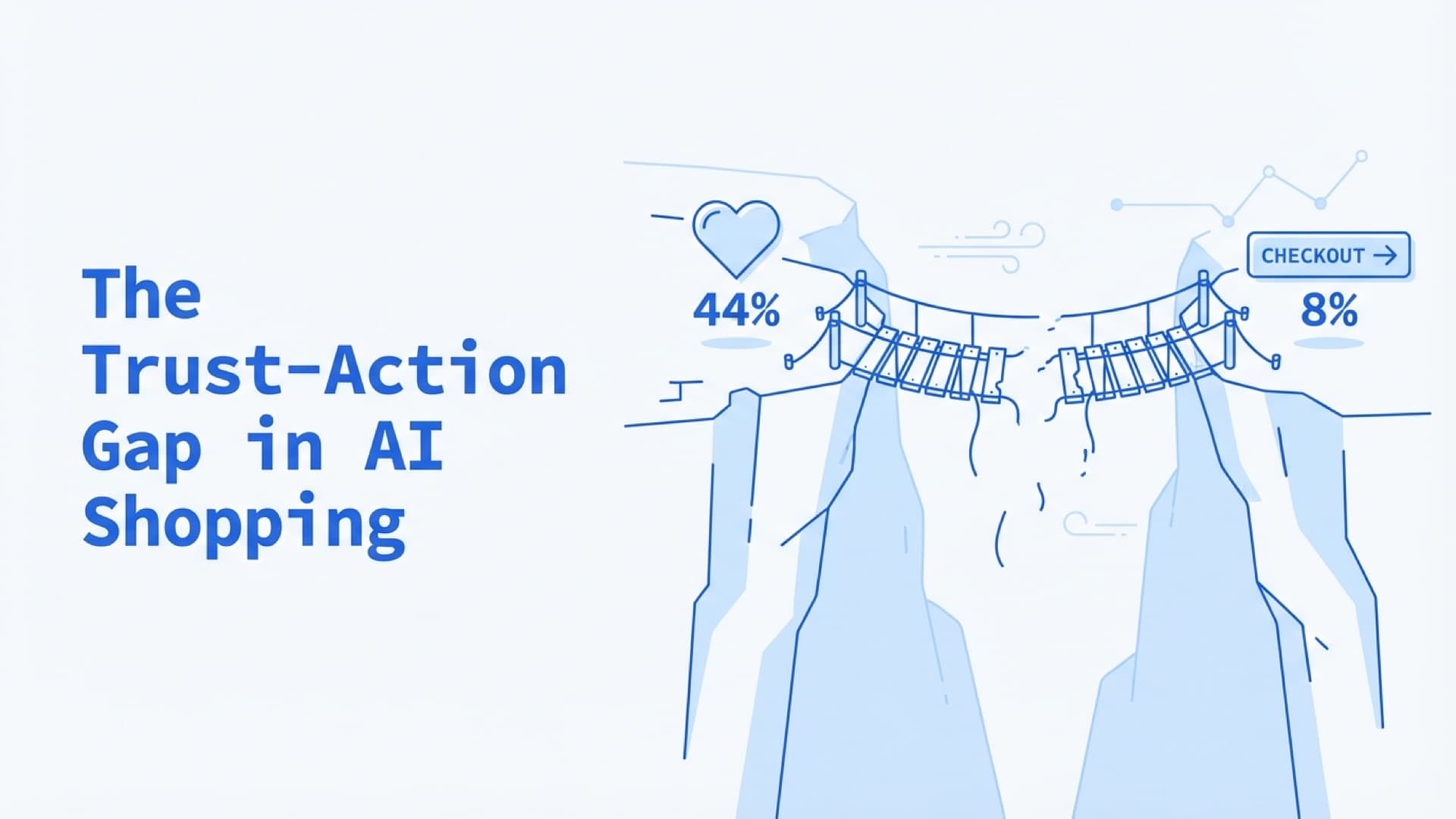
The Trust-Action Gap: Why 'Comfortable' Doesn't Mean 'Buying'
44% of Americans say they'd let AI browse for them. Only 10% have actually bought something using AI. I dug into what sits between comfort and the checkout button.
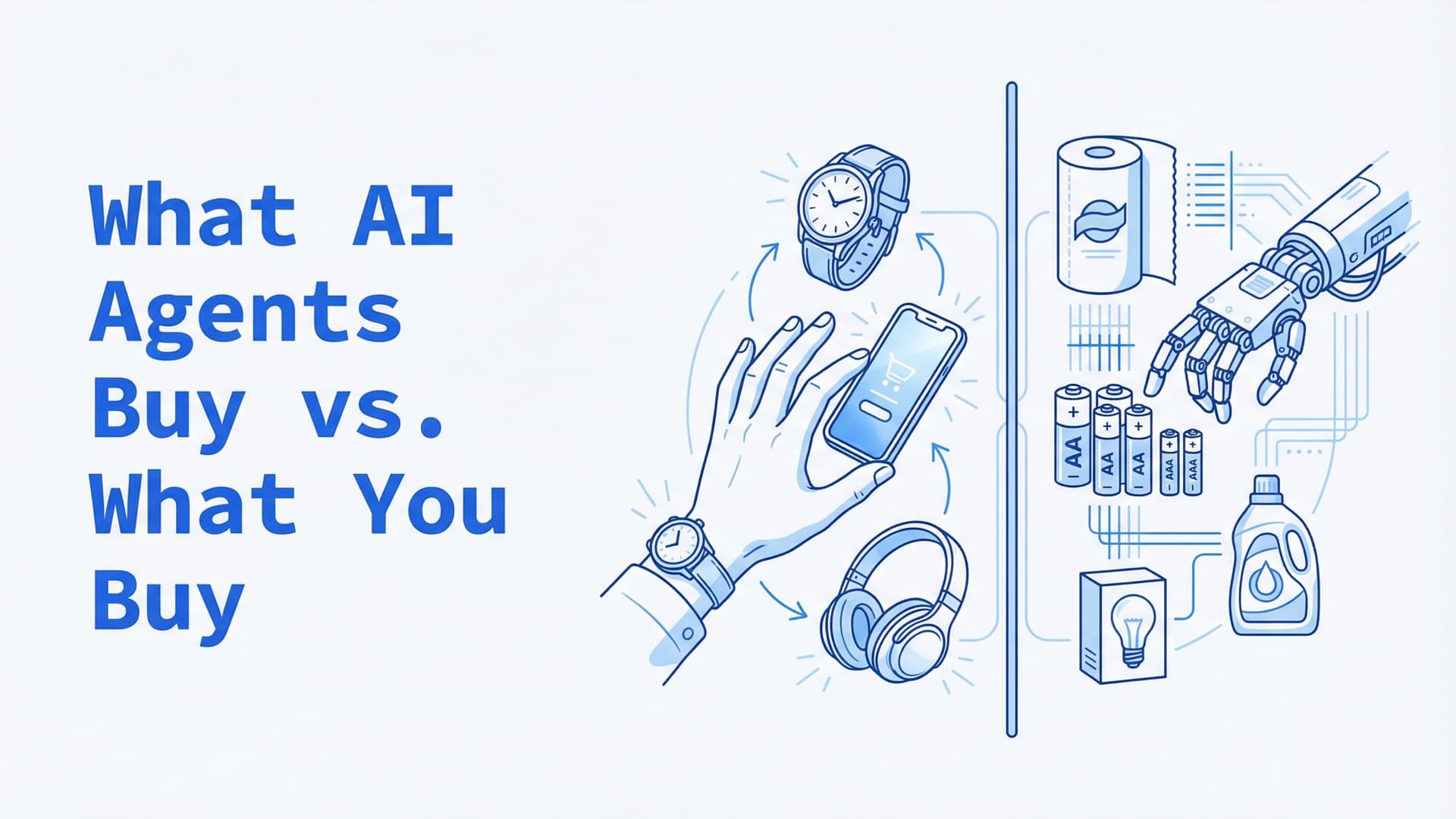
What AI Agents Will Buy vs. What You'll Buy Yourself
Only 6% would give an AI agent full purchasing control. But 55% want AI guidance when they shop for electronics. The real line isn't AI vs. human — it's about what you're buying.