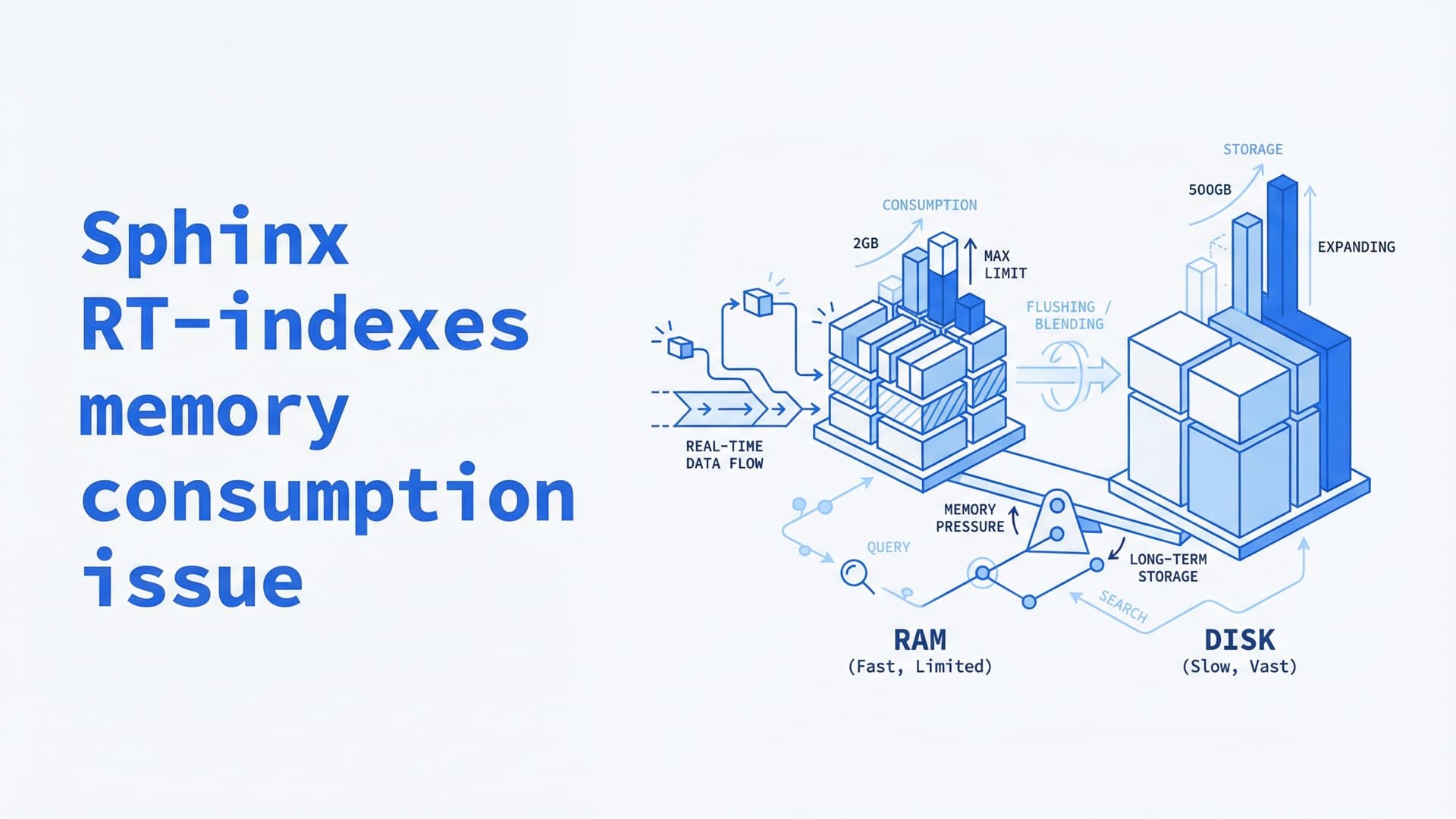
Sphinx RT-indexes memory consumption issue
 Mindaugas Zukas··Updated
 The Sphinx team recently published new article about Sphinx memory consumption.
It provides the formula to estimate the memory consumption for RT indexes:
For RT-index you can estimate memory consumption by calculating the size of all on-disk chunks (minus .spd & .spp sizes as noted above) plus RAM-chunk size (rt_mem_limit)
The formula looks good, but notice that they also added size of RAM-file into it.
What is that RAM-file?
The RAM-file is used to store all necessary data for Sphinx RT-indexes.
Sphinx keeps the RAM-file in memory to support real time updates for RT-indexes.
Before the RAM-file data is copied to a general chunk file, the RAM-file should reach rt_mem_limit in size.
Each RT-index has a personal RAM file.
So, what's wrong with the RAM-file?
Imagine we have 30 indexes each 3Gb in size.
If we want to keep number of index-chunks low, i.e. less than 5, we need to set rt_mem_limit to 1Gb.
In this case we will have 3 chunks for each index.
Now let's estimate how much memory we need to support this configuration.
For 30 indexes we will have 30 RAM-files multiplied by 1Gb (rt_mem_limit) which will make 30Gb.
30Gb of free memory is required to support our configuration and that's without counting .spa and .spi files.
Of course in a real system with random data distribution Sphinx will consume much less memory, probably 1.5 times less.
Ok, lets decrease rt_mem_limit 10 times to 100Mb.
In this case we will get 3Gb memory required, but the number of chunks for each index will grow from
3 to 30 (overall it is 900 chunks for 30 indexes).
Now let's imagine how fast Sphinx will query each of 30 or more chunks.
It will be very slow, because of many disk I/O operations, especially if we query more than one index at a time!
Conclusion
Low rt_mem_limit is good for memory, but hurts Sphinx performance.
High rt_mem_limit could gives good performance, but requires a lot of free memory.
The Sphinx team definitely needs to optimize this feature, i.e. add a new option to control RAM-file size (i.e. rt_RAM_limit).
rt_RAM_limit in conjunction with rt_mem_limit could give more flexibility to better setup the massive number of RT-indexes
on an average server with 16Gb of memory on board.
Another option is to exclude .spp and .spd data from RAM-file, so it keeps only those things in memory that are supposed to be there - .spa and .spi.
Need help with search infrastructure? See how Ivinco's development team can help →
Frequently Asked Questions
How much memory do Sphinx real-time indexes consume?
Each RT index maintains a RAM chunk sized by rt_mem_limit. Total memory equals the sum of all on-disk chunk metadata (.spa and .spi files) plus one RAM chunk per index. With 30 indexes and rt_mem_limit set to 1GB, you need at minimum 30GB just for RAM chunks — before counting disk chunk metadata. Plan your server memory around this formula.
How does rt_mem_limit affect Sphinx RT index performance?
Higher rt_mem_limit means fewer on-disk chunks (better query performance) but more memory per index. Lower values save memory but create more chunks, causing slower queries due to disk I/O across many chunk files. For 30 indexes of 3GB each, setting rt_mem_limit to 1GB gives 3 chunks per index (fast queries, 30GB RAM). Setting it to 100MB gives 30 chunks per index (slow queries, 3GB RAM).
How do you reduce Sphinx RT index memory usage without hurting performance?
Reduce the number of RT indexes by merging small indexes where possible. Use OPTIMIZE INDEX periodically to merge disk chunks and reduce their count. Consider excluding .spp and .spd data from memory by using access_plain_attrs = mmap settings. For indexes that don't need real-time updates, use plain indexes instead — they have much lower memory overhead.
Related Reading
Related posts
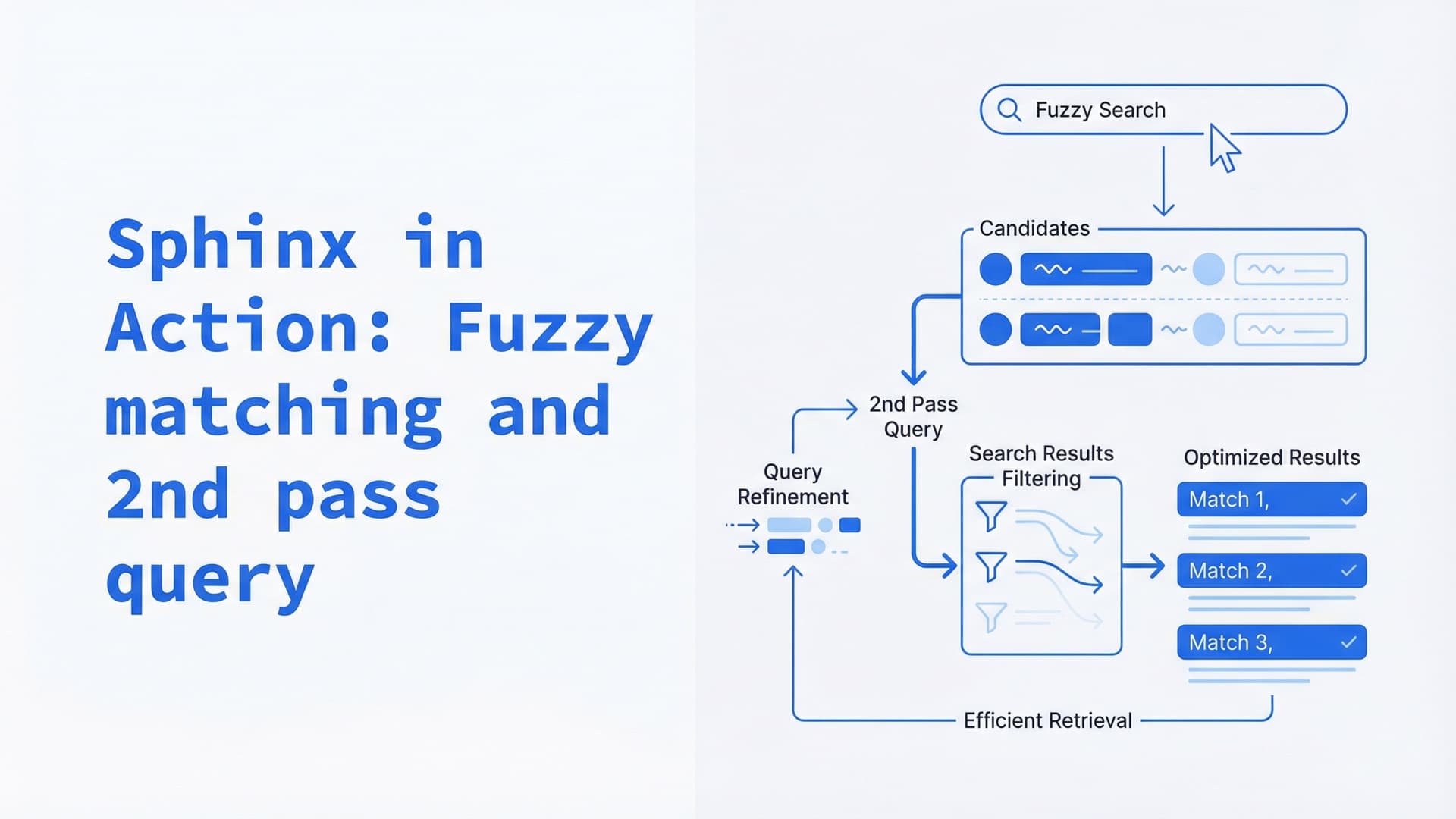
Sphinx in Action: Fuzzy matching and 2nd pass query
This is a post from a series of posts called "Sphinx in Action".
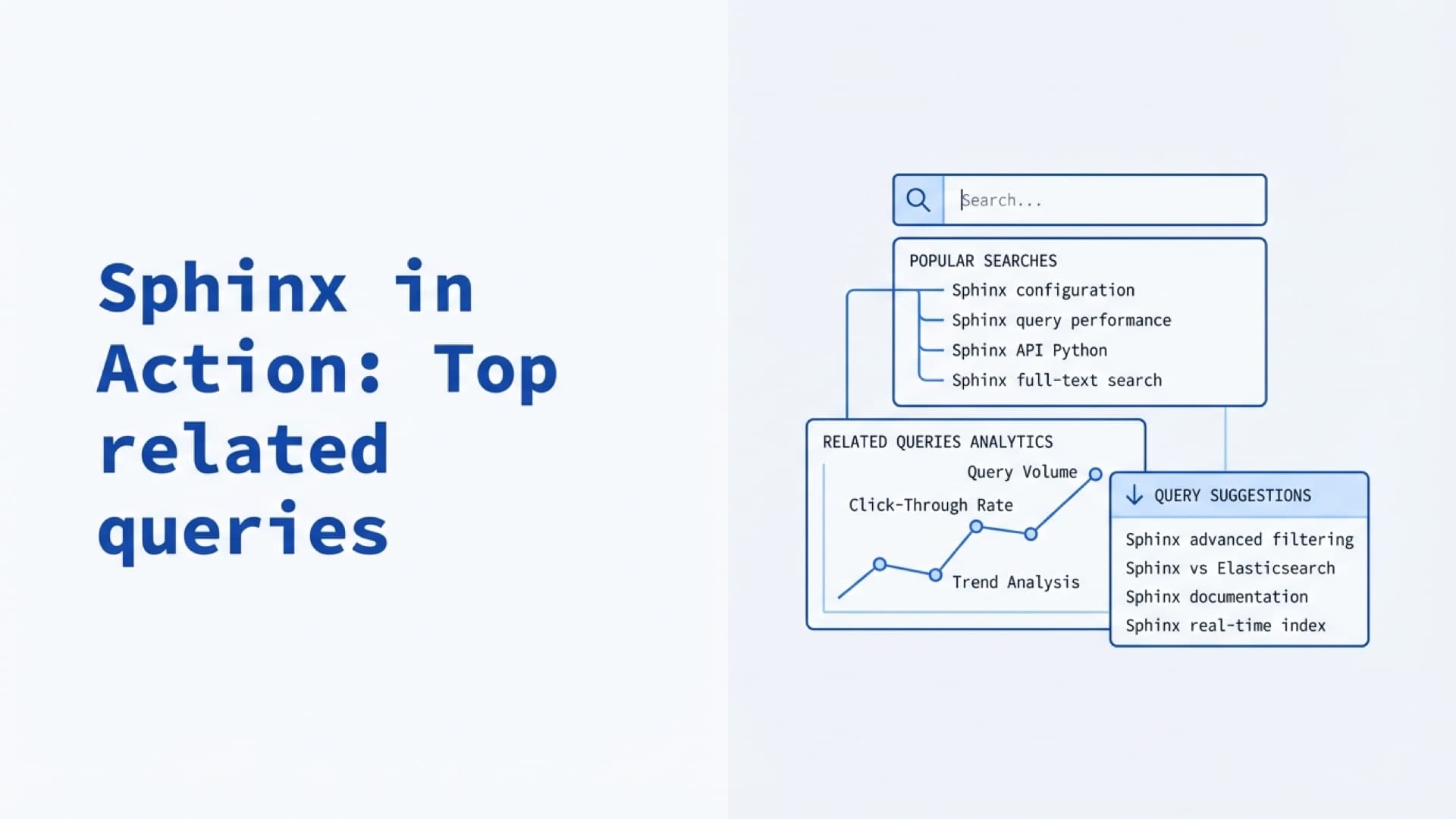
Sphinx in Action: Top related queries
This is a post from a series of posts called "Sphinx in Action".

Sphinx in Action: Autocomplete
This is a post from a series of posts called "Sphinx in Action".