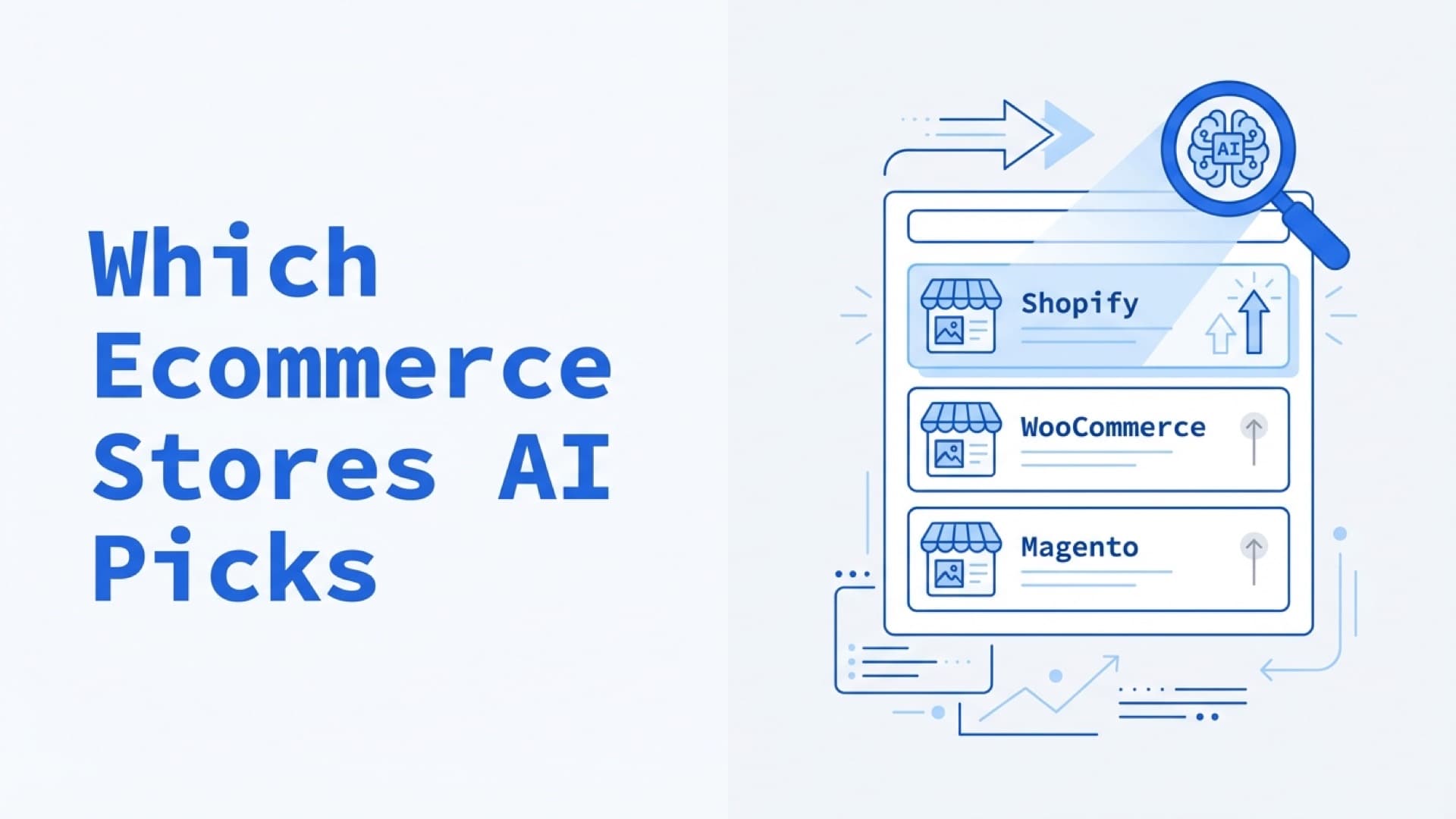
Which Ecommerce Stores Show Up When AI Goes Shopping?
 Eugene Levitin·
Update, October 2026: OpenAI confirmed in March 2026 that it is ending Instant Checkout in favor of working with retailers on dedicated apps inside ChatGPT, so read the Instant Checkout parts of this post as history.
I have a toddler. Needed pajamas. So I typed the same query into ChatGPT, Perplexity, and Gemini: "organic cotton pajamas for a 2-year-old."
Then I did something most shoppers wouldn't do — I checked the source code, robots.txt, and script tags of every store that showed up. Mapped each product recommendation to its commerce platform.
The pattern was immediate: Shopify stores dominated the results across all three AI platforms. Not because they had the best pajamas. Because their product data was structured in a way AI agents could actually read.
That test led me down a rabbit hole. I ran more queries across electronics, skincare, and running shoes. Talked to merchants. Read the protocol specs. What I found explains why some stores are already winning AI shopping — and why millions of others are invisible.
How I Tested This
I ran identical shopping queries across three AI platforms over two weeks in early 2026:
- ChatGPT (with Shopping enabled)
- Perplexity (Shopping tab)
- Google Gemini (AI Mode)
For each query, I mapped every recommended product to its commerce platform by inspecting source code, meta tags, and technology stack indicators. I tested across four product categories: baby clothing, consumer electronics, skincare, and running shoes.
This isn't a rigorous academic study — it's a practitioner's observation of what's happening right now. The sample is small. But the pattern was consistent enough to be worth sharing.
The Results: Shopify Stores Keep Showing Up
In the pajama test, ChatGPT returned 6 products. Four out of 6 ran on Shopify. Perplexity recommended 9 brands — 6 out of 9 were Shopify stores. Gemini showed product cards pulling from Google Merchant Center data, with a mix of Shopify and Salesforce Commerce Cloud.
Across all four categories, the same pattern repeated. Shopify-powered stores appeared disproportionately in AI shopping results. When I dug into why, the answer wasn't mysterious.
Shopify is pre-integrated with both major commerce protocols:
- ACP (Agentic Commerce Protocol) from OpenAI and Stripe — powers "Buy it in ChatGPT" instant checkout
- UCP (Universal Commerce Protocol) from Google, Shopify, and 20+ partners — enables AI agents to browse catalogs, manage carts, and complete purchases
Their merchants didn't have to do anything. The integrations work out of the box. When OpenAI launched ChatGPT checkout in September 2025, it said over a million Shopify merchants, including Glossier, SKIMS, Spanx, and Vuori, were coming soon.
Why Most Stores Are Invisible to AI Agents
Now think about the platforms that weren't showing up.
WooCommerce powers more than 4 million stores, by its own count. Zero native protocol integration. Magento runs many enterprise stores. No integration. Salesforce Commerce Cloud runs Adidas, Ralph Lauren, Lululemon. SAP Commerce Cloud runs Dr. Martens, Oakley, Carhartt.
These are billion-dollar brands on platforms with no native ACP or UCP support. When an AI agent goes shopping, their products either don't appear — or get recommended through a third-party retailer instead of the brand's own store.
The issue isn't that these platforms can't add protocol support. It's that they haven't yet, and the gap is widening every month. AI-driven traffic to Shopify stores was up 7x since January 2025, Shopify said on its third-quarter earnings call (as reported by TechCrunch). Orders attributed to AI jumped 11x. That traffic is going somewhere, and right now it's going to stores the AI can actually talk to.
What AI Agents Actually Read (And What They Skip)
After the platform pattern became obvious, I started testing a different question: among stores on the same platform, why do some products get recommended and others don't?
A skincare brand with 218 reviews was outranking one with 20,000+ in Perplexity's results. Not because of SEO. Not ads. Their product data was structured differently.
Here's what the AI platforms prioritize, based on published specs and observed behavior:
Without These, You're Invisible
Structured product data (schema.org JSON-LD). AI agents literally cannot read your product specs without it.
Product identifiers (GTINs/UPCs). This is how AI matches your product across platforms. Without a GTIN, the agent can't confirm that your "organic cotton sleeper" is the same product mentioned in reviews elsewhere.
Accurate, real-time pricing and availability. Stale data gets you excluded. OpenAI's commerce docs ask for a full feed snapshot at least daily, with prices and availability updated when they change. Google's Shopping Graph refreshes 2 billion product listings per hour across its 50+ billion total listings. If your inventory feed updates daily, you're already behind.
Publicly accessible product pages. Most AI crawlers cannot render JavaScript-heavy pages. Prerender.io cites an analysis finding that GPTBot, ClaudeBot and PerplexityBot fetch JavaScript files without executing them. Gemini is the exception, because it inherits Googlebot's rendering.
The Competitive Edge
Review quality over quantity. Perplexity weights Reddit discussions and professional reviews higher than merchant-hosted reviews. This is why that 218-review skincare brand beat the 20,000-review competitor — the smaller brand had genuine, detailed reviews across independent sources.
Feed update frequency. Daily is the minimum. Real-time is the goal.
Description specificity. Functional, attribute-rich descriptions beat marketing language. AI agents don't care about your brand story — they're matching specs to a query. "100% organic Pima cotton, 280 GSM, tagless, GOTS certified, fits 2T-3T" beats "the softest, most luxurious pajamas your little one will ever wear."
Instant checkout support. OpenAI says ChatGPT's product results are "organic and unsponsored, ranked purely on relevance to the user." But when several merchants sell the same product, ChatGPT "considers factors like availability, price, quality, whether a merchant is the primary seller, and whether Instant Checkout is enabled."
The Platform Gap in Numbers
The traffic shift is already measurable. In March 2025, Adobe Analytics reported that traffic to US retail websites from generative AI sources jumped 1,200%.
But here's where it gets interesting. According to a study by Kaiser and Schulze analyzing 973 ecommerce sites with $20 billion in combined revenue, ChatGPT referral traffic is still roughly 200x smaller than organic Google traffic. AI shopping is growing fast from a small base.
The conversion story is split. Microsoft reports that customer journeys with Copilot are 33% shorter than with traditional search, and that when shopping intent is present, journeys with Copilot are 194% more likely to result in a purchase. But the Kaiser and Schulze study found that affiliate links were 86% more likely to convert than ChatGPT referrals. The gap likely reflects the difference between known-item purchases (where AI excels) and browsing (where it doesn't).
What this means practically: AI shopping traffic is small but growing fast, it converts well for specific query types, and the stores that show up now are building an early-mover advantage.
Small Brands Are Beating Big Ones
The most surprising finding in my testing wasn't about platforms — it was about brand size. Small DTC brands with clean product feeds consistently outperformed larger names with messy data.
A UK running store I'd never heard of took all three featured spots in a Perplexity shopping query, beating major athletic brands. The store had complete schema markup, real-time inventory, detailed product attributes, and rich third-party reviews. The big brands had higher name recognition but worse structured data.
This is a fundamentally different game than traditional ecommerce SEO. Brand authority still matters for Google's organic results. For AI shopping, data quality matters more.
What You Should Do About This
If you're on Shopify, you're already in the game — but don't assume the defaults are enough. Check your product feeds for missing GTINs, incomplete variant data, and stale pricing. Make sure your schema markup goes beyond what your theme provides by default.
If you're on WooCommerce, Magento, Salesforce, or another platform without native protocol support, the priority list is:
Get your structured data right first. Add complete schema.org JSON-LD to every product page — Product schema with GTINs, pricing, availability, reviews. This makes you visible to AI research queries even without protocol integration.
Submit to Google Merchant Center. Gemini pulls from the Shopping Graph. If your products aren't there, they don't exist in Google's AI Mode.
Join Perplexity's free Merchant Program. Perplexity says it increases your chances of being a "recommended product," because your products enter its index.
Watch for protocol integrations. PayPal's ACP server, announced for 2026, will bring the product catalogs of PayPal merchants, which PayPal counts in the tens of millions, onto ChatGPT without individual merchant integrations. WooCommerce and Magento plugins are being developed by independent teams (including ours at Ivinco).
Update your feeds more frequently. Move from daily to hourly if your platform supports it. Real-time is the goal.
The old visibility game was keywords and backlinks. This one is about data quality machines can read. The stores that figure this out first — regardless of size — are the ones AI will recommend.
Frequently Asked Questions
Which ecommerce platform is best for AI shopping visibility?
Shopify currently has the strongest AI shopping visibility because it's pre-integrated with both ACP (OpenAI/Stripe) and UCP (Google/Shopify). Merchants get protocol support out of the box. WooCommerce, Magento, and Salesforce Commerce Cloud have no native protocol integration, making their stores harder for AI agents to discover and transact with.
Does my store size matter for AI shopping recommendations?
Brand size matters less than data quality for AI shopping recommendations. In testing, small DTC brands with complete schema markup, GTINs, and real-time pricing consistently outranked larger brands with messy product data.
How much traffic comes from AI shopping right now?
AI shopping traffic is growing fast but still small compared to traditional channels. A study of 973 ecommerce sites found ChatGPT referral traffic is roughly 200x smaller than organic Google traffic.
What product data do AI shopping agents need?
AI agents require four baseline elements: structured product data in schema.org JSON-LD format, product identifiers like GTINs or UPCs, accurate real-time pricing and availability, and publicly accessible product pages that don't rely on JavaScript rendering. Without these, AI agents cannot parse your catalog and will skip your products entirely.
Can WooCommerce stores show up in AI shopping results?
Yes, but it requires manual work. WooCommerce stores can appear in AI research results by adding complete schema.org markup and submitting to Google Merchant Center. For transactional AI shopping (in-chat checkout), WooCommerce needs UCP or ACP integration, which is not available natively. Independent teams are building these integrations, and PayPal's ACP server is expected to bring PayPal merchants' catalogs, including WooCommerce stores that use PayPal, onto ChatGPT in 2026.
Sources: OpenAI Shopping Research, ACP Product Feed Specification, Google UCP Developer Guide, Kaiser/Schulze study (973 sites, $20B revenue), Microsoft Copilot Checkout Data, Perplexity Shopping Merchant Program, Shopify Winter '26 Edition

CEO, Ivinco
CEO of Ivinco, a senior engineering team in production since 2009. Currently exploring how AI agents are reshaping e-commerce infrastructure.
Related posts
Who Captures the Value When AI Shops for You?
OpenAI charged merchants 4% for AI checkout. Six weeks later, they killed it. I traced where the distribution tax actually lands in agentic commerce.
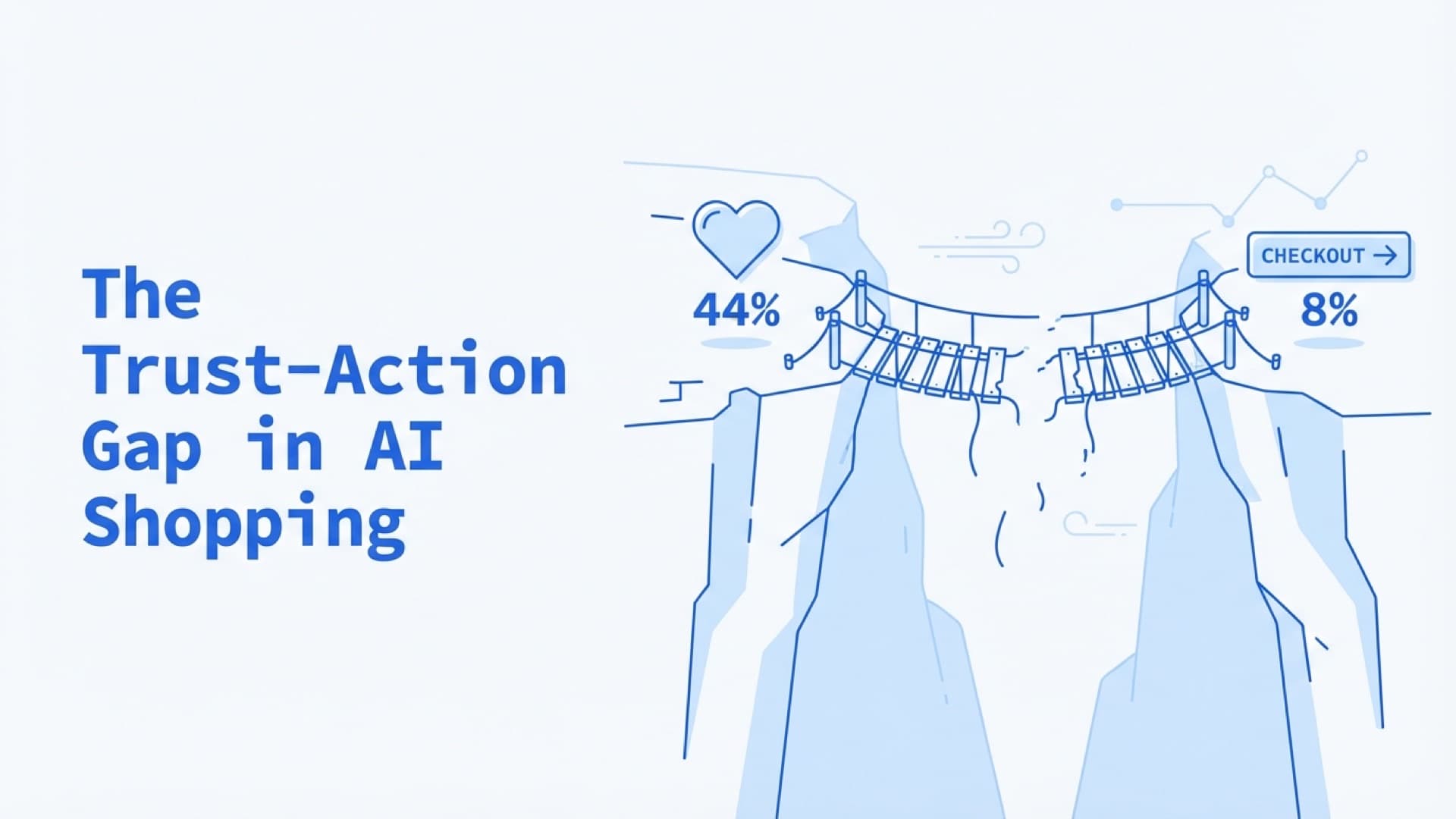
The Trust-Action Gap: Why 'Comfortable' Doesn't Mean 'Buying'
44% of Americans say they'd let AI browse for them. Only 10% have actually bought something using AI. I dug into what sits between comfort and the checkout button.
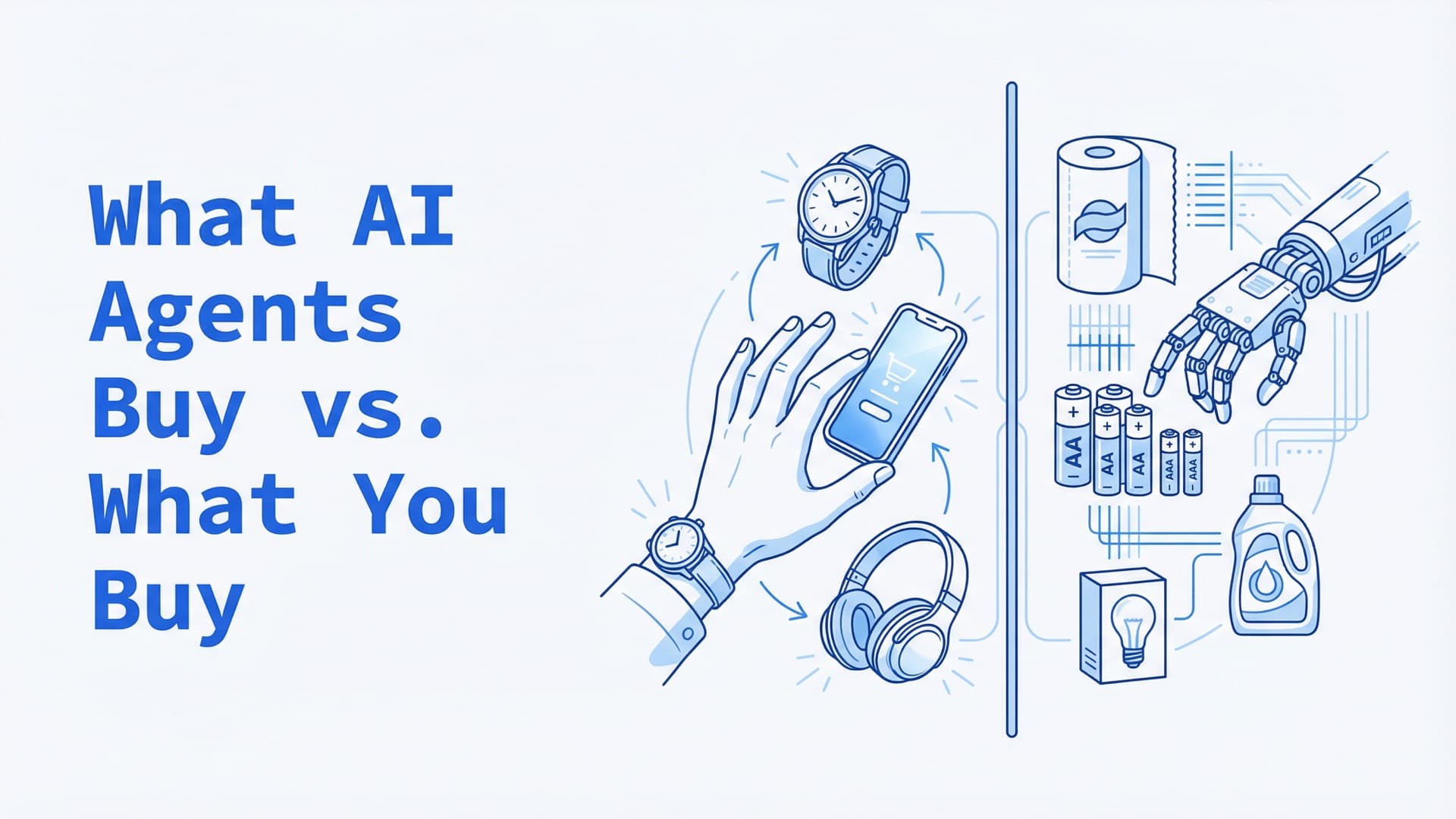
What AI Agents Will Buy vs. What You'll Buy Yourself
Only 6% would give an AI agent full purchasing control. But 55% want AI guidance when they shop for electronics. The real line isn't AI vs. human — it's about what you're buying.