China Is Already Living in the Agentic Commerce Future
 Eugene Levitin·
A VC from Hong Kong messaged me last week about Chinese vendors who want to sell to American AI shopping agents.
I didn't know much about agentic commerce in China. So I went digging.
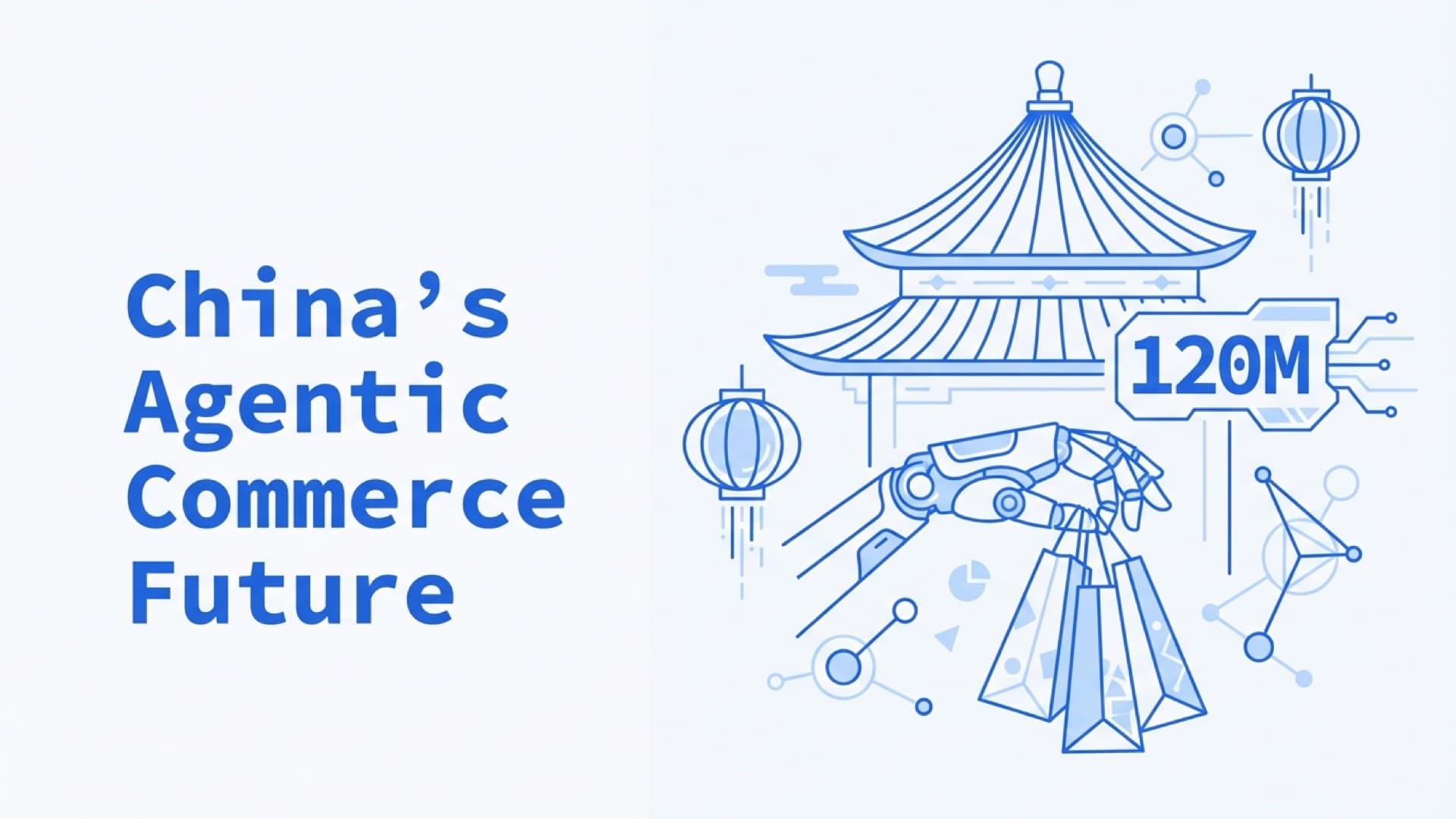
Alipay's AI Pay, which handles payments made through AI agents, processed more than 120 million transactions in a single week in February 2026, according to Alipay. Not browsing sessions. Not chatbot conversations. Payments, made through AI agents in apps, mini programs and smart glasses.
In the US, Google and Shopify had announced their Universal Commerce Protocol a month earlier, saying native shopping on Google's AI surfaces was "rolling out soon." ChatGPT's Instant Checkout had started with Etsy sellers in September 2025. China was processing 120 million AI payments a week.
That number changed how I think about the agentic commerce timeline. Not whether it's coming — but how far behind the US already is.
The Scale of What China Built
The numbers across China's tech giants are hard to fully absorb.
Alibaba's Qwen chatbot passed 100 million monthly active users within two months of launching in November 2025, according to 36Kr. Since a January update, users can compare product recommendations from Taobao, book flights on Fliggy, and pay via Alipay, all without leaving the chatbot, CNBC reported. During Chinese New Year, Alibaba ran a 3 billion yuan ($431 million) campaign subsidizing purchases through Qwen. Over 10 million bubble tea orders were placed within nine hours of the launch, enough to overload the system and temporarily suspend coupon distribution, Inside Retail Asia reported.
ByteDance's Doubao chatbot reportedly had 159 million monthly active users in October 2025, according to Mobile World Live. On a ZTE prototype phone launched in December 2025, the Doubao assistant could read the screen, open Taobao, JD.com, Pinduoduo, and Douyin Mall one by one, compare prices, and stop at the cheapest option for the user to pay, 36Kr reported. It wasn't fast: the shampoo price comparison 36Kr described took 3 minutes and 12 seconds.
Tencent built its Yuanbao chatbot into WeChat, where users can add it as a contact without downloading a separate app. That puts it in front of WeChat's 1.41 billion monthly users (Tencent). Its 1 billion yuan ($140 million) Chinese New Year red-envelope campaign helped take Yuanbao, along with Qwen, to the top of Apple's App Store downloads in China, Rest of World reported.
Baidu said in April 2024 that its ERNIE Bot had passed 200 million users. During Double 11 in 2025, 83% of livestreamers used Baidu's digital human technology, driving a 119% year-over-year increase in participating livestreams and a 91% boost in gross merchandise value, Baidu says.
China's generative AI user base reached 515 million by June 2025, with 266 million new users in just six months, according to the China Internet Network Information Center. Market penetration: 36.5%.
The Super-App Architecture Advantage
Here's the part that matters most for anyone in ecommerce outside China.
China doesn't need a Universal Commerce Protocol because Alibaba already IS the protocol. When your AI chatbot (Qwen), your marketplace (Taobao), and your payment system (Alipay) are the same company, you skip years of interoperability debates.
In the US, the architecture looks fundamentally different. UCP connects Google to Shopify to Visa to Target — separate companies, each with their own systems, agreeing on a common standard. ACP connects OpenAI to Stripe to Etsy to the merchant's checkout. Every connection is a negotiation. Every integration is a project.
In China, Luckin Coffee's AI assistant keeps the whole purchase inside the chat. The customer picks drinks in the conversation and says "place order"; after identity verification, Alipay processes the payment without leaving the conversation, Finextra reported. No checkout page. No leaving the conversation. Before this, AI agents could help with ordering but sent users to a separate payment confirmation page.
The US equivalent would require ChatGPT to talk to Shopify's API, authenticate through Stripe, verify the user's identity, check inventory, calculate shipping, and process payment — across at least four separate companies. We're building that. But China shipped it.
4.5 Billion Yuan in a Single Holiday Period
The spending numbers tell you how seriously China's tech giants take this.
During Chinese New Year 2026, Alibaba committed 3 billion yuan ($431 million), Tencent 1 billion yuan, and Baidu 500 million yuan to red-envelope campaigns for their AI apps, and ByteDance's cloud arm became the exclusive AI partner of the CCTV Spring Festival Gala, Inside Retail Asia reported. Total disclosed spending: about 4.5 billion yuan in a single holiday period.
These weren't ordinary marketing budgets. Inside Retail Asia traces the playbook to the digital red envelopes of a decade ago, when Tencent's WeChat "converted hundreds of millions of users into payment customers almost overnight." That push created the infrastructure that makes today's AI commerce possible. This one is creating the habits.
The tech giants are subsidizing a behavioral shift: getting hundreds of millions of people comfortable buying things through conversations with AI.
Why the US Can't Just Copy This
The structural differences between China and the US aren't about technology or investment. They're about architecture.
China has super-apps. The US has apps. WeChat alone combines messaging, payments, mini-programs, and commerce for 1.41 billion users. There's no US equivalent — not even close.
China has integrated ecosystems. The US has competing standards. The US now has UCP from Google and Shopify, ACP from OpenAI and Stripe, MCP from Anthropic, A2A from Google, Visa's Trusted Agent Protocol, and Mastercard's Agent Pay. Six protocols from different companies, and only some of them fit together: Google's UCP guide says UCP is compatible with A2A and MCP. China has companies that own the whole stack.
China has consumer habits built on mobile payments. Chinese consumers are already comfortable paying through conversational interfaces. American consumers are still figuring out whether they trust Apple Pay at checkout.
As CNBC summarized the view of Forrester analyst Charlie Dai, Chinese platforms benefit from "integrated ecosystems, rich behavioral data, and consumer familiarity with super apps," while Western companies "face more fragmented data and stricter privacy regulations, slowing cross-service integration."
What This Means for US Ecommerce
The implication isn't that China is "better" at this. It's that the two markets are solving fundamentally different problems.
China's problem was: "How do we make AI commerce work inside ecosystems we already control?" That problem is solved. 120 million transactions a week.
America's problem is: "How do we make AI commerce work across thousands of independent companies that don't trust each other?" That problem is much harder. And the protocols being built — UCP, ACP — are genuinely impressive attempts at solving it.
But the timeline matters. Chinese platforms are perfecting buy-through-conversation with 515 million generative AI users at home right now. Once it works at home, the export playbook writes itself. Baidu's digital human technology has already debuted in Brazil. ByteDance is developing a second-generation Doubao phone with ZTE's Nubia brand.
Temu has already matched Amazon as the most used cross-border e-retailer, counted by number of orders, according to the International Post Corporation. The US ended the de minimis exemption for shipments from China and Hong Kong in May 2025, applying duties to millions of low-value parcels. But tariffs don't stop the technology. Chinese sellers are already using AI tools for English-language product listings and customer service targeting Western markets.
The VC who messaged me wasn't asking a theoretical question. His portfolio companies are already planning for it.
The Uncomfortable Comparison
| Metric | China (Feb 2026) | US (Feb 2026) |
|---|---|---|
| Weekly agentic transactions | 120 million+ (Alipay alone) | No comparable metric exists |
| AI adoption | 515 million GenAI users (June 2025) | 39% had used generative AI for online shopping (Adobe, March 2025) |
| AI app subsidies | 4.5 billion yuan+ in one holiday period | Protocol development stage |
| End-to-end agent commerce | Live — order, pay, deliver in one flow | Experimental (ChatGPT checkout, Perplexity shopping) |
The US has advantages China doesn't: open protocols that could create a more competitive market, stronger privacy protections, and a more diverse merchant ecosystem. But on raw execution speed, it's not close.
What US Sellers Should Watch
The cross-border threat is real but not immediate. Chinese agentic commerce is focused domestically right now. But once Alibaba and ByteDance perfect the model, export follows. US sellers should watch for AI-native competitors entering their categories through cross-border platforms.
Protocol adoption matters more than ever. If US commerce stays fragmented while Chinese ecosystems ship integrated solutions, the gap widens. Getting your store onto UCP and ACP isn't just about ChatGPT visibility — it's about building the connective tissue the US market needs to compete.
Product data is your moat regardless of geography. AI agents in every market need the same thing: structured, accurate, real-time product data. Whether the agent runs on Qwen or ChatGPT, it reads schema.org markup. Get your structured data right first.
Agentic commerce starts with commodities. In both China and the US, AI purchasing works for replenishment and low-stakes items. If you sell commodity products, this is your timeline. If you sell considered purchases, you have more time — but not as much as you think.
Frequently Asked Questions
How far ahead is China in agentic commerce?
China is significantly ahead in transaction volume and consumer adoption. Alipay's AI Pay processed more than 120 million transactions in a single week in February 2026, and the US has no comparable metric. China's generative AI user base reached 515 million by mid-2025, and super-app architecture lets an AI agent take the order and the payment inside one conversation. The US is still in the protocol-building and pilot stage.
Why can't the US replicate China's super-app approach?
The US lacks the integrated super-app ecosystems that make China's agentic commerce possible. Chinese platforms like Alibaba own the chatbot, marketplace, and payment system in one company. The US market is fragmented across separate companies (Google, Shopify, Stripe, OpenAI) that must agree on protocols to interoperate. Stricter privacy regulations and different consumer payment habits also slow integration.
Is Chinese agentic commerce coming to US markets?
Not yet directly, but the groundwork is being laid. Temu has matched Amazon as the most used cross-border e-retailer by number of orders. Baidu's digital human technology has launched in Brazil. ByteDance is developing a second-generation phone with its Doubao assistant built in. Chinese sellers are already using AI for English-language product listings and customer service. Once domestic AI commerce models are proven, cross-border expansion is the logical next step.
How much did Chinese tech giants spend on AI shopping in 2026?
During Chinese New Year 2026 alone, Alibaba, Tencent, and Baidu committed about 4.5 billion yuan to red-envelope campaigns for their AI apps: 3 billion yuan (about $431 million) from Alibaba, 1 billion yuan from Tencent, and 500 million yuan from Baidu, according to Inside Retail Asia. It compares the push to the digital red envelopes of a decade ago, which turned hundreds of millions of WeChat users into payment customers.
What should US ecommerce sellers do about the China gap?
Focus on what you can control: get your product data structured and machine-readable (schema.org JSON-LD, GTINs, real-time pricing), adopt UCP and ACP protocols as they become available, and submit products to Google Merchant Center. The structural advantages that make Chinese agentic commerce fast — super-app integration, unified payments — aren't replicable. But clean product data works for AI agents in every market.
Sources: Alipay AI Pay Milestone (Business Wire, Feb 2026), CNBC Chinese Tech Giants Report (Jan 2026), 36Kr Qwen and Doubao Coverage, Inside Retail Asia Chinese New Year Coverage (Feb 2026), Rest of World (Feb 2026), Tencent Q3 2025 Results, Baidu World 2025 Release, CNNIC via gov.cn, Finextra Luckin Coffee Implementation, SCMP Tencent WeChat Integration, Mobile World Live, TechNode, International Post Corporation, The White House, Adobe Analytics, Google UCP Developer Guide, Shopify, OpenAI ChatGPT Shopping

CEO, Ivinco
CEO of Ivinco, a senior engineering team in production since 2009. Currently exploring how AI agents are reshaping e-commerce infrastructure.
Related posts
Who Captures the Value When AI Shops for You?
OpenAI charged merchants 4% for AI checkout. Six weeks later, they killed it. I traced where the distribution tax actually lands in agentic commerce.
The Trust-Action Gap: Why 'Comfortable' Doesn't Mean 'Buying'
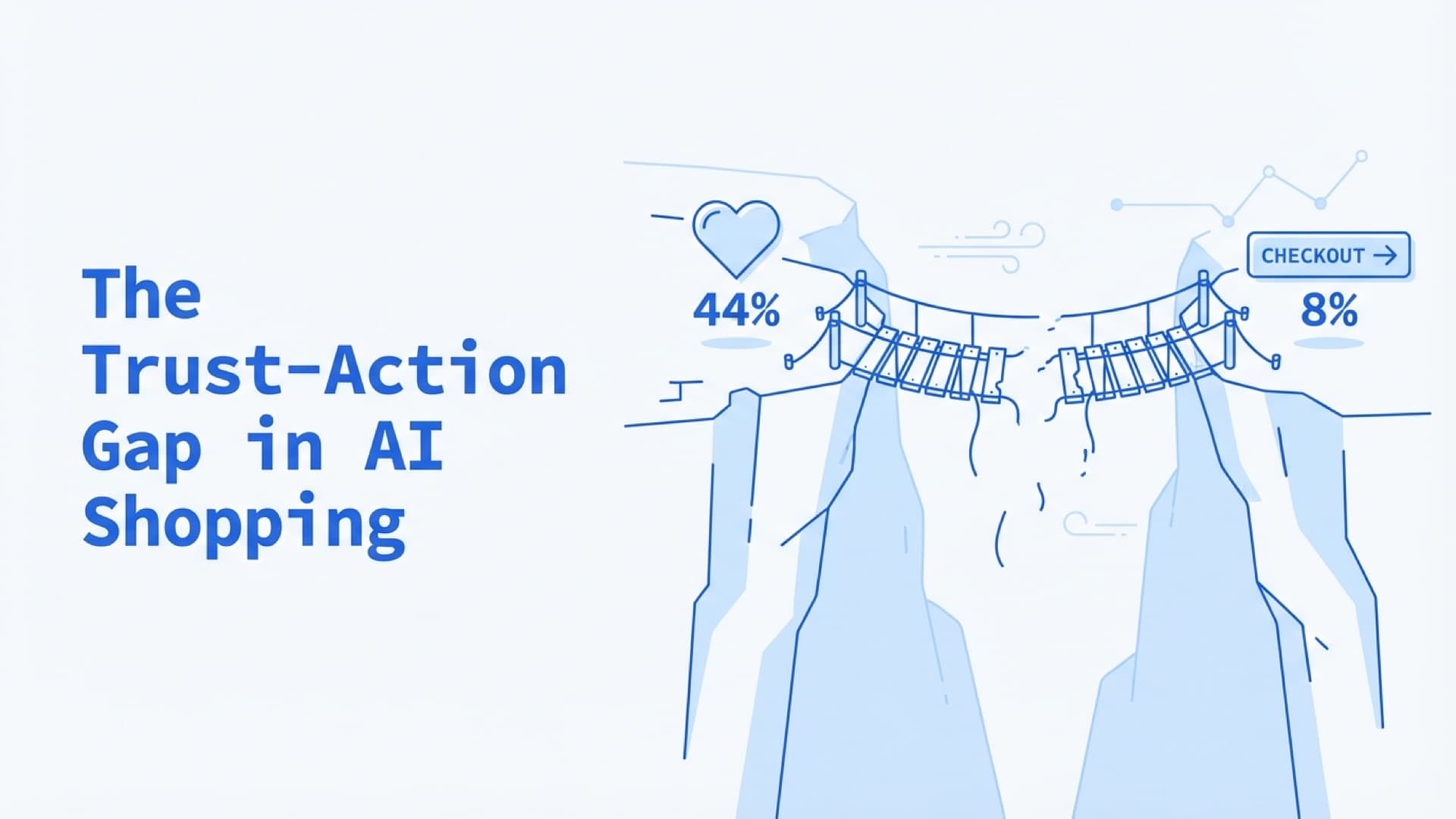
44% of Americans say they'd let AI browse for them. Only 10% have actually bought something using AI. I dug into what sits between comfort and the checkout button.
What AI Agents Will Buy vs. What You'll Buy Yourself
Only 6% would give an AI agent full purchasing control. But 55% want AI guidance when they shop for electronics. The real line isn't AI vs. human — it's about what you're buying.