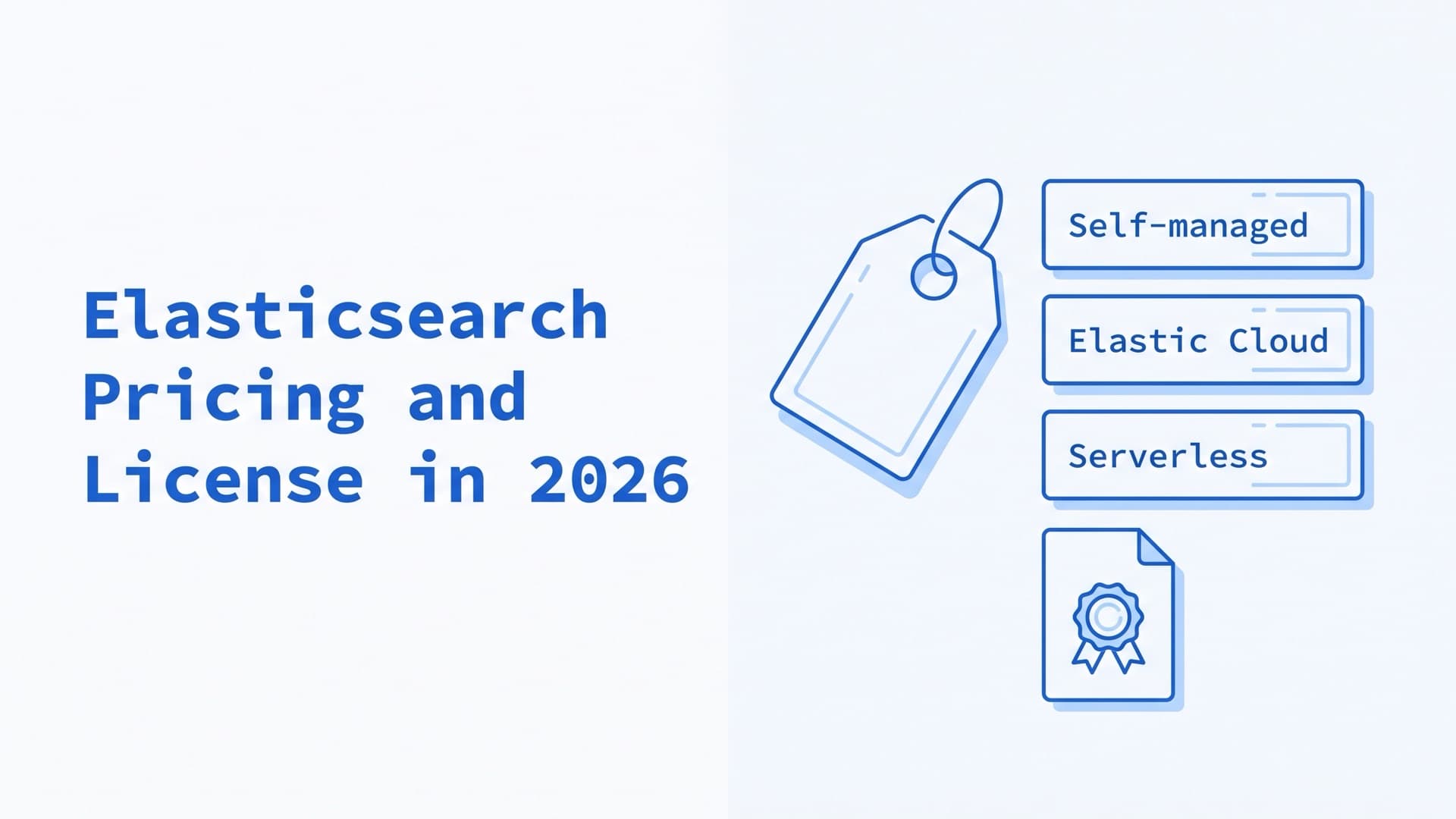
Elasticsearch Pricing and License in 2026
How much does Elasticsearch cost?
Elasticsearch costs nothing to download. The default distribution is free under the Elastic License 2.0 (ELv2), commercial use included. New buyers need Enterprise for self-managed paid features, priced by quote. As of October 2026, Elastic Cloud Hosted starts at $99 a month and Serverless bills by usage. Amazon OpenSearch Service, which runs Elasticsearch up to 7.10, bills by instance and storage.
Ivinco has built search since 2009. Every price below comes from the vendor's own pages or price list. All sources were checked in October 2026.
Elasticsearch pricing at a glance
The table lists each way to pay for Elasticsearch, as of October 2026.
| Option | Billed by | Price |
|---|---|---|
| Self-managed Basic | Free license | $0 |
| Self-managed Enterprise | Nodes and RAM | Quote only |
| Self-managed Platinum | Existing customers only | Quote only |
| Elastic Cloud Hosted | RAM-hours, by tier | From $99 a month |
| Elastic Cloud Serverless | Compute, data, storage | Pay per use |
| Cloud marketplaces | Elastic usage on your cloud bill | Pay per use |
| Amazon OpenSearch Service | Instances, storage, transfer | No minimum fee |
The self-managed rows also need servers or cloud instances, disks and snapshot storage. Every option can add data transfer charges and staff time. The sections below cover each row and those extra costs.
Is Elasticsearch free? The license explained
For most uses, yes. The default download "is governed by the Elastic License, and includes the full set of free features" (Elastic). Those are the Basic features. For Gold, Platinum and Enterprise features, "a subscription is required" (ELv2 FAQ). The Elastic License 2.0 (ELv2) lets you use, copy, change and redistribute the software, with three limits.
- You may not offer it as a hosted or managed service that gives users a substantial set of its features.
- You may not bypass its license keys or remove features they protect.
- You must keep Elastic's licensing, copyright and other notices.
Elastic's ELv2 FAQ applies these limits to common cases.
| Use | Allowed under ELv2? |
|---|---|
| Internal use at your company | Yes, free |
| A search box in your SaaS product | Yes |
| View-only Kibana dashboards in your SaaS | Yes |
| A contractor's setup for a client's own use | Yes |
| Hosting it for customers who never use it directly | Yes |
| A service whose customers directly use substantial parts of its APIs or Kibana | No |
The source code works differently. Elastic moved it off Apache 2.0 in 2021 and added AGPLv3 as an option from 8.16.0, released in November 2024. By default, it is under AGPLv3, SSPL or ELv2, and code in the x-pack folder is under ELv2 only.
You choose among them only when you use the source code, and Elastic's own builds stay under ELv2 (licensing FAQ). SSPL section 13 requires anyone offering the software as a service to publish the source of the whole service stack. AGPLv3 section 13 requires you to offer your modified source to users who reach it over a network.
Kibana is under the same terms. Elastic's licensing FAQ says its client libraries, Beats and Logstash stay under Apache 2.0. Have counsel check your own case.
Elasticsearch Basic license vs Platinum and Enterprise
Elastic's subscriptions page compares Basic, Platinum and Enterprise for self-managed clusters. Basic is free. Platinum is for existing customers only, and self-managed Gold is discontinued. So a new customer who needs any paid feature buys Enterprise. The table shows where common features sit, as of October 2026.
| Feature | Tier |
|---|---|
| TLS, users, role-based access | Basic |
| Vector search, ES|QL, SQL APIs | Basic |
| Kibana Discover, dashboards, Lens | Basic |
| Index lifecycle, data tiers, snapshots | Basic |
| SSO, LDAP, Active Directory | Platinum, Enterprise |
| Field- and document-level security | Platinum, Enterprise |
| Audit logging, IP filtering | Platinum, Enterprise |
| Email, Slack and webhook alerts | Platinum, Enterprise |
| Anomaly detection, ELSER models | Platinum, Enterprise |
| Cross-cluster replication | Platinum, Enterprise |
| JDBC, ODBC, PDF reports | Platinum, Enterprise |
| Searchable snapshots | Enterprise |
| RRF hybrid search, learning to rank | Enterprise |
| Inference API, Agent Builder | Enterprise |
| Elastic Cloud Enterprise | Enterprise |
Many of these features once came as X-Pack, an Elastic extension with free and paid parts. Since version 6.3, they ship in the default download, and the license decides which ones run (Elastic).
Paid tiers also include Elastic's support. On the free tier, "you rely on community forums for help" (Elastic).
A new self-managed cluster starts on a Basic license that never expires. It can run a 30-day trial of every paid feature, once per major version. When a paid license expires, the cluster reverts to Basic. Kibana's License Management page shows the current license and installs a new one.
Self-managed Elasticsearch pricing
Elastic doesn't publish self-managed prices, whether the cluster runs on premises or in your own cloud account. Its pricing page describes "licensing based on number of nodes and used RAM". The subscriptions page sends buyers to sales for pricing.
On Kubernetes, Elastic's ECK operator reports usage in Enterprise Resource Units. ECK counts the memory each managed node is configured to have.
A subscription buys features and support. Platinum and Enterprise include 24/7 support, with a one-hour target response for critical issues (subscriptions). Enterprise also covers Elastic Cloud Enterprise, Elastic's software for running many clusters, and ECK's paid features such as autoscaling.
The license is one line of the bill. You still pay for servers or cloud instances, disks, snapshot storage and the people who run the cluster. Elastic offers AutoOps monitoring for self-managed clusters on every tier, Basic included, through Cloud Connect.
Elastic Cloud Hosted pricing
Elastic Cloud Hosted runs Elasticsearch deployments on AWS, Azure and Google Cloud. You choose the cloud, region, hardware profile and node sizes. Each hardware profile sets its own mix of storage, RAM and vCPUs (calculator). As of October 2026, the four tiers start at these prices.
| Tier | From | Support |
|---|---|---|
| Standard | $99 a month | Web, platform only, 3 business days |
| Gold | $114 a month | Business hours, phone |
| Platinum | $131 a month | 24/7, 1-hour urgent |
| Enterprise | $184 a month | 24/7, 30-minute urgent |
Elastic bases these starting prices on a "cloud production config, 120 GB storage / 2 zones", without naming a cloud, region or hardware profile. Smaller deployments can cost less in its calculator. Platinum and Enterprise add a 99.95% monthly uptime SLA (Elastic).
Each node is priced per GB of RAM per hour. CPU and disk scale with RAM and are included in that rate (billing dimensions). The rate depends on the cloud, region, hardware profile and tier. In AWS us-east-1, as of October 2026, Elastic's price list charges $0.0282 per GB-hour for the m6gd hot-data instance on Standard. The same instance costs $0.0562 on Enterprise.
Pricing is linear. Elastic's pricing FAQ says 8GB of RAM costs eight times as much as 1GB, and three availability zones cost three times as much as one.
Data transfer and snapshots come on top, at the same rates in every tier (price list, October 2026).
- Data out. $0.05 per GB. Data in is free.
- Traffic between nodes. $0.016 per GB on AWS and Google Cloud. Elastic currently waives it on Azure.
- Snapshot storage. $0.033 per GB-month.
- Snapshot API calls. $0.0018 per 1,000 requests.
Each account gets a monthly free allowance of 100GB of data out and inter-node traffic combined, 100GB of snapshot storage and 100,000 snapshot API requests (billing dimensions).
You can pay monthly by card, monthly through a cloud marketplace, or a year in advance (billing models). Annual contracts buy Elastic Consumption Units, worth $1.00 each at list price and typically bought at a discount. Unused credits expire. The Standard tier isn't available on prepaid contracts (Elastic). New accounts can start with a 14-day free trial.
Elastic Cloud Serverless pricing
Serverless projects bill by usage, and Elastic manages the hardware, cluster size and node count (Elastic). Each project type has its own units.
Elasticsearch Serverless pricing
Search projects bill compute in virtual compute units (VCUs) with 1GB of RAM each, plus storage (Elastic). The table shows the lowest regional rates, as of October 2026.
| Unit | Price from | Used for |
|---|---|---|
| Ingest VCU | $0.14 an hour | Indexing, pipelines |
| Search VCU | $0.09 an hour | Queries, aggregations |
| ML VCU | $0.07 an hour | Embeddings, inference |
| Storage | $0.047 per GB-month | Data retained |
| Data out | $0.05 per GB | After 50GB free |
Rates vary by region. Elastic's price table lists ingest VCUs from $0.14 an hour in AWS us-east-1 to $0.273 in Azure's Brazil South region.
Search VCUs never drop to zero. Elastic keeps a baseline of search capacity and bills it at a reduced rate when idle. Two things set that baseline: the Search Power setting and the size of your searchable data. Search Power's options are On-demand, Performant (the default) and High availability. Ingest VCUs scale to zero after 15 minutes without indexing (billing docs).
Elastic's pricing page gives two worked examples, as of October 2026.
| Elastic's example | On-demand | Performant |
|---|---|---|
| Dev, 2GB searchable | $24 a month | $27 a month |
| Prod, 20GB searchable | $190 a month | $210 a month |
The dev example indexes for 15 minutes and searches for 2 hours a day. The prod example indexes for 1 hour and searches for 8 hours a day. Elastic says both are "for illustrative purposes only".
Observability and Security Serverless pricing
These projects bill per GB ingested and per GB retained each month, with two feature tiers each (Observability, Security). Their pricing pages quote "as low as" rates. Elastic's price table shows that those sit near the end of a volume scale that starts higher. The table gives the first and last steps in AWS us-east-1, as of October 2026.
| Tier | Ingest per GB | Kept per GB-month |
|---|---|---|
| Logs Essentials | $0.35 to $0.0648 | $0.036 to $0.0169 |
| Observability Complete | $0.50 to $0.0925 | $0.04 to $0.0188 |
| Security Essentials | $0.50 to $0.0925 | $0.036 to $0.0169 |
| Security Complete | $0.60 to $0.111 | $0.04 to $0.0188 |
The first ingest rate covers the first 1,500GB each month, and the last applies only to GB above 150,000. Retention steps down from the first 10,000GB-months to above 2.5 million. Elastic's estimator applies each rate only to the GB inside its step, and its price table says this pricing applies per project. In Observability Complete, metrics in time series mode cost 25% of the standard rates (billing docs). Logs Essentials prices metrics like logs (pricing). Security projects have charged no per-endpoint fees since March 23, 2026 (pricing), and endpoint data bills as ingest and retention (billing docs).
Support costs extra above the Standard tier. Serverless adds 5% of usage for Gold, 10% for Platinum and 15% for Enterprise (Elastic). The downloads page offers a 14-day Serverless trial with no credit card.
AWS Elasticsearch pricing
AWS renamed Amazon Elasticsearch Service to Amazon OpenSearch Service in 2021. The service runs OpenSearch and legacy Elasticsearch OSS up to 7.10, the last Apache 2.0 version. It doesn't run current Elasticsearch, which is at 9.5.5. Our OpenSearch comparison answers whether Elasticsearch still exists after the rename. Current Elasticsearch runs on AWS through Elastic Cloud Hosted, sold by Elastic or through AWS Marketplace, or as a self-managed cluster.
Managed domains have no minimum fee. AWS bills instance hours, storage and data transfer, with on-demand, Reserved Instance and Database Savings Plans pricing. Traffic between nodes in a domain is free. Automated snapshots are stored free for 14 days, and manual snapshots cost standard S3 rates.
AWS charges extra to run old Elasticsearch versions. Its standard support for Elasticsearch 7.1 to 7.8, and most older versions, ended on November 7, 2025 (AWS). From November 7, 2026 to November 7, 2027, their Extended Support fee equals the instance price. AWS's own example shows this doubling the instance cost (pricing). On AWS, Elasticsearch 6.8, 7.9 and 7.10 keep standard support until November 7, 2027. After that, Extended Support adds $0.0065 per normalized instance hour in US East (N. Virginia), at October 2026 prices.
Our OpenSearch vs Elasticsearch comparison covers OpenSearch Serverless and other managed hosts.
Elastic Cloud on AWS, Azure and Google Cloud marketplaces
Elastic also sells Elastic Cloud through the AWS, Azure and Google Cloud marketplaces. Usage is reported to the marketplace every hour and charged on your cloud bill (Elastic). Elastic's pricing FAQ says the spend counts toward AWS and Google Cloud commitments and draws down Azure MACC contracts. AWS offers a 7-day free trial, and Azure gives new users 7 days. Google Cloud's trial covers up to $1,000 of Elastic's fees or 7 days, whichever ends first.
Elasticsearch costs people miss
List prices leave out several costs.
Replicas. Each index keeps one replica of every primary shard by default (Elastic). That second copy doubles the disk the data needs.
Metered size. Serverless meters data after enrichment and before compression. Elastic says metered volumes "will be much higher" than raw or compressed size (pricing page). Its estimator puts metered logs at about 1.66 times the raw volume.
Data transfer. Elastic Cloud bills data out above its free allowance, and Hosted also bills traffic between nodes. Amazon OpenSearch Service bills standard AWS rates for data in and out. A self-managed cluster in the cloud pays its provider's own rates.
Snapshots. Snapshots are incremental. They grow as data is added or updated. Deletes don't shrink them until the snapshots holding that data are removed (Elastic).
Memory headroom. If you set the JVM heap yourself, Elastic says to keep it at or below 50% of a node's memory (Elastic). The rest goes to memory outside the heap and the filesystem cache. Elastic also suggests shards of 10GB to 50GB and warns that too many shards can make a cluster unstable (Elastic).
Upgrades. Elastic maintains the two newest minor releases of the current major, plus the last minor of the previous one (version policy). It shipped 9.3.0, 9.4.0 and 9.5.0 in February, May and August 2026 (GitHub). Staying on a maintained version means regular upgrades.
People. Someone plans capacity, applies upgrades, tests restores and answers alerts. Those hours belong in the budget next to the server bill.
If you're weighing what your cluster really costs, tell us about it. We've built and maintained search systems for over 15 years.
Elastic Cloud pricing calculator and how to estimate your cost
Elastic and AWS publish their own pricing tools.
- The Elastic Cloud pricing calculator prices a Hosted deployment by cloud, region, hardware profile, tier and node size.
- The Serverless estimator covers Observability, Security and Vector Database projects. Its Elasticsearch option says "Coming Soon", and it handles estimates up to $10K a month.
- Elastic's price table lists every rate by cloud, region and date.
- The AWS Pricing Calculator covers Amazon OpenSearch Service.
Both Elastic tools say their results are not a quote. To fill them in, start with your own workload. These inputs drive the price in every model above.
- Data volume. Raw GB per day, and the size after enrichment.
- Retention. How long you keep data, and how much must stay fast to search.
- Copies. Replicas, availability zones and snapshots.
- Query load. Searches per second and latency targets.
- Extras. Machine learning, vector search and AI features.
- Location. Cloud provider and region.
For precise numbers, Elastic recommends monitoring your actual usage (Elastic). A trial with a sample of your own data shows that usage before you commit.
Help with your search engine
We have built search since 2009. Today we build it on Manticore Search, Elasticsearch or whichever engine fits the job. Manticore is our close partner, so a project gets fast support and custom features from its team when it needs them. Tell us about your search workload. The first conversation is free.
Frequently Asked Questions
Is Elasticsearch free for commercial use?
Yes. The default download is free under the Elastic License 2.0, including inside a commercial product or SaaS. You may not offer Elasticsearch itself as a managed service, bypass its license keys or remove Elastic's notices. Paid features, such as single sign-on, still need a subscription. The free Basic tier covers TLS, role-based access, vector search and Kibana dashboards.
Is Elasticsearch open source?
Partly. From version 8.16.0, released in November 2024, Elasticsearch source code outside the x-pack folder is available under AGPLv3, alongside SSPL and the Elastic License 2.0. AGPLv3 is an OSI-approved open-source license. The x-pack code and the default download stay under the Elastic License. Paid features still need a subscription.
How much does an Elasticsearch license cost?
Elastic doesn't publish self-managed license prices. It licenses self-managed clusters by node count and RAM, and sales quotes each deal (Elastic). New self-managed customers can buy only Enterprise, since Platinum is closed to them. The Basic license is free. On Elastic Cloud Hosted, Standard starts at $99 a month for a two-zone production setup, as of October 2026.
How much does Kibana cost?
Kibana is free with the Basic license, under the same terms as Elasticsearch. Its paid features, such as PDF reports and single sign-on, follow Elastic's subscription tiers. On Elastic Cloud Hosted, a 1GB Kibana instance is part of the free allowance, and larger ones bill by the hour. Serverless projects include Kibana.
Is the Elastic Stack free to use?
Mostly. Elasticsearch and Kibana are free under the Elastic License with the Basic features, and Elastic Agent is in the free tier too. Elastic says its client libraries, Beats and Logstash stay under Apache 2.0. Paid tiers add features such as machine learning and single sign-on. Hosting, storage and staff time still cost money.
What are the downsides of using Elasticsearch?
Cost-related downsides include paid features, many billing dimensions and cluster upkeep. Self-managed SSO, field-level security and RRF hybrid search need a subscription. Elastic Cloud Hosted bills compute, data transfer and snapshots separately. Self-managed clusters need shard planning and regular upgrades. Our guide to Elasticsearch alternatives explains why some companies move away.
Related posts
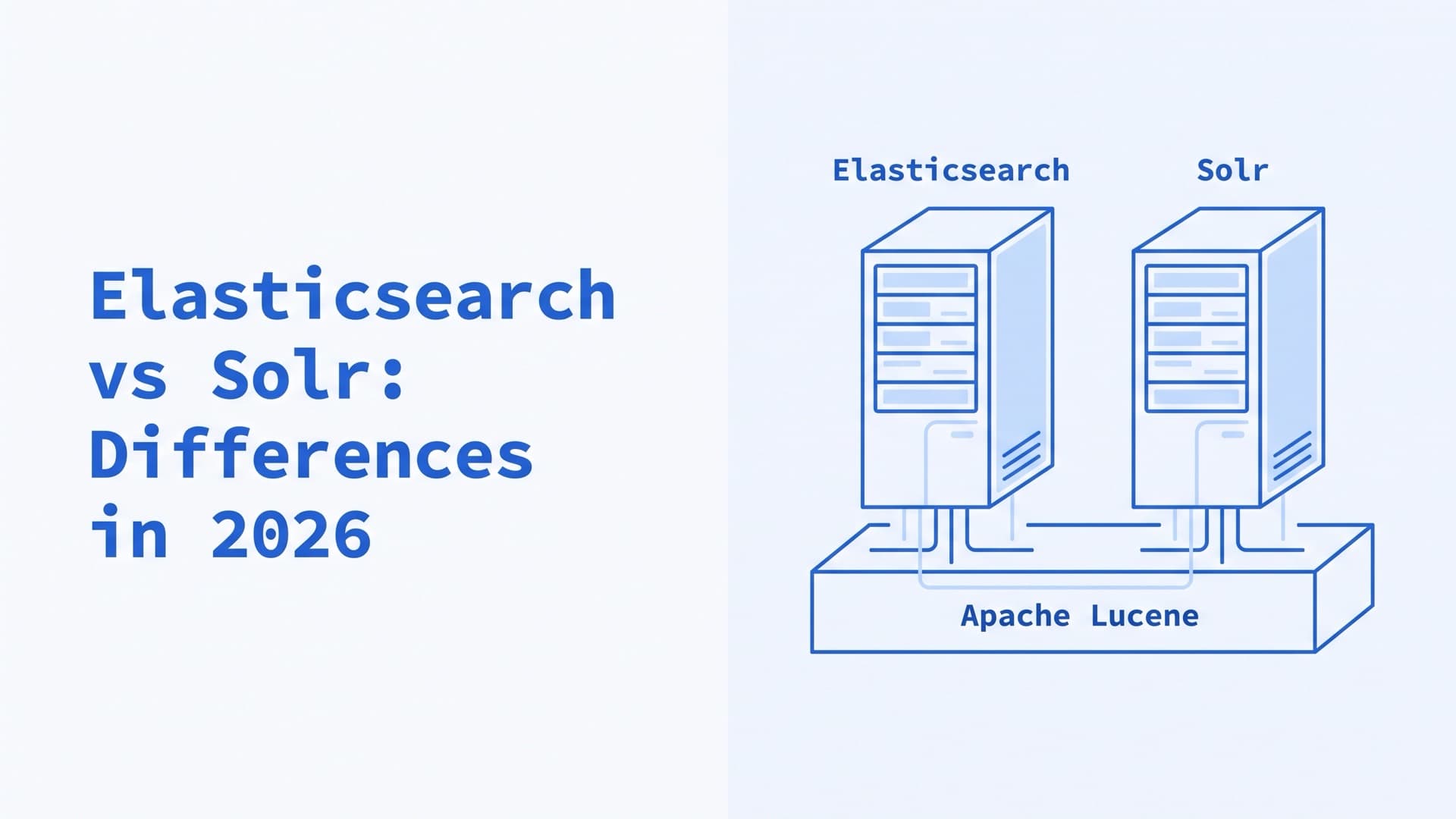
Elasticsearch vs Solr: Differences in 2026
Elasticsearch vs Solr as of October 2026: licenses, Solr 10, clusters, queries, vector search, benchmarks, hosting, migration and which to pick.
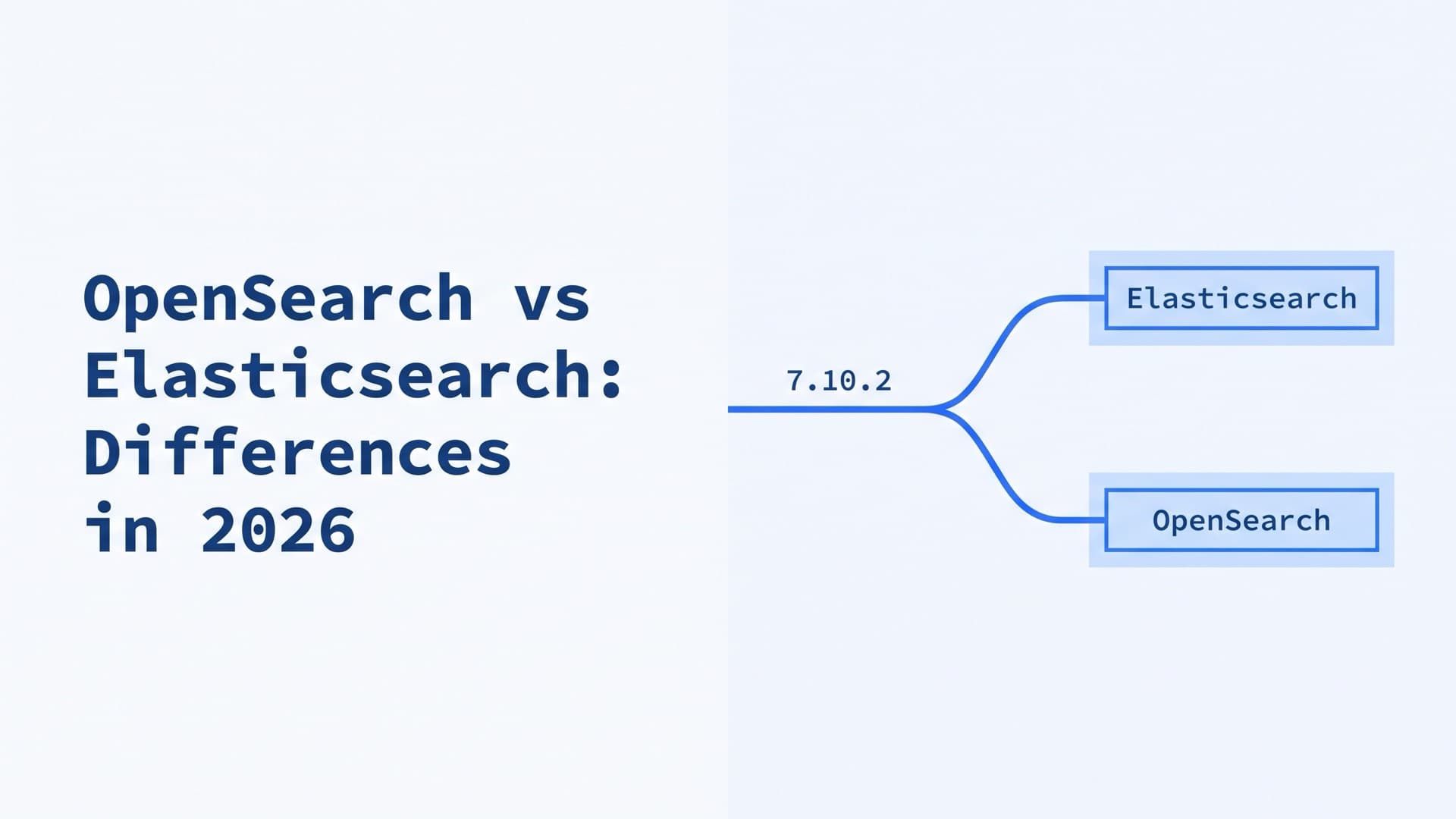
OpenSearch vs Elasticsearch: Differences in 2026
OpenSearch vs Elasticsearch as of October 2026: licenses, features, vector search, benchmarks, AWS and Elastic Cloud pricing, migration and which to pick.
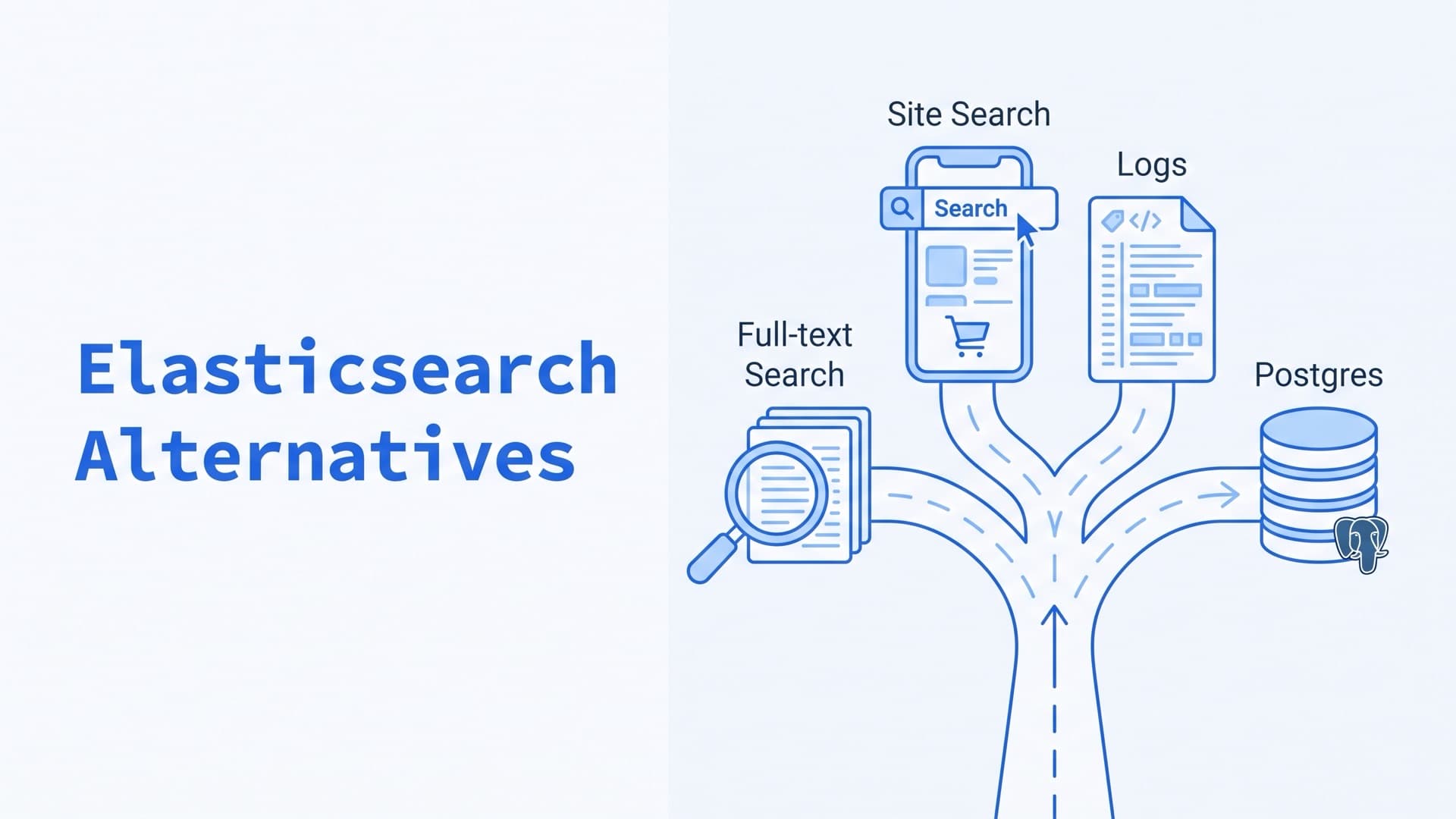
Elasticsearch Alternatives in 2026, by Workload
The best Elasticsearch alternative depends on the job. OpenSearch, Typesense, Meilisearch, Loki and more, compared by license, fit and switching cost.