DevOps consulting services
DevOps consulting from engineers who run production every day.
We review your pipelines, clusters and monitoring, fix what slows releases or wakes people up at night, and then hand it back to your team or keep running it. In production since 2009.
DevOps consulting services help a company ship software faster and run it more reliably. The work covers the build and deploy pipeline, the infrastructure the software runs on, monitoring and alerting, and how incidents get handled. A DevOps consultant finds what slows releases or causes outages, fixes it, and leaves your team able to run the result.
Our engineers spend their days running production infrastructure: Kubernetes on bare metal and in the cloud, CI/CD, databases, crawling and search. The team that reviews your setup is the team that fixes it.
When teams call us
Releases take a day and three people
Deploys need a checklist, a quiet afternoon and someone who remembers the order of the steps, so the team ships less often than it could.
Customers find outages before you do
Alerts are either silent or so noisy that people mute them, and nobody trusts the dashboards.
A cloud bill nobody can explain
Spend grows every quarter, and the invoice doesn't show which workloads drive it.
One person knows how it all works
When that engineer is on vacation, nothing gets deployed.
What our DevOps consulting covers
CI/CD pipelines
Build, test and deploy pipelines in GoCD, GitHub Actions or GitLab CI, with rollbacks you have actually tested.
Kubernetes
Cluster design, upgrades and day-to-day operations, in the cloud or on your own servers, including storage on Ceph. More on our Kubernetes services.
Monitoring and on-call
Prometheus, Grafana, VictoriaMetrics, VictoriaLogs and Zabbix, with alerts tied to what your users notice. By agreement, we take on-call for the systems we run, up to 24-hour coverage under an SLA, and write the runbooks that make the next incident shorter.
Infrastructure as code
Servers, clusters and environments described in Ansible code and container images, so they can be rebuilt from the repository.
Databases
MySQL, PostgreSQL and ClickHouse: replication, backups, version upgrades, and moving databases onto Kubernetes.
Cloud costs
Find what drives the bill and right-size what you run. We also show you where bare metal would cost less, and where it would not.
Access and backups
Access control with FreeIPA, and backups with Bareos and ZFS snapshots.
AI agents for operations
MCP servers and agent runbooks that let your team query logs and metrics from Claude, with a human approval step before anything changes. See AI agents and MCP.
Ways to work together
Emergency help
Something is down or a change went wrong. We step in, get it running again and tell you what happened.
Assessment
A fixed price. We review your pipelines, clusters, monitoring and costs, and give you a written list of problems ordered by what each one costs you.
Project
A fixed or capped price for a defined piece of work, such as a move to Kubernetes, a new deploy pipeline or a monitoring overhaul, done by the team that scoped it.
Fixed price for a result
We agree on the result and the deadline, and you pay a fixed price for the result, however many hours it takes us.
Ongoing support
A monthly fee, month to month or on a yearly contract. By agreement it includes on-call, up to 24-hour coverage under an SLA.
How an engagement works
- 1
Intro call
Tell us what hurts. If it looks like a fit, we ask for read-only access to the repositories, pipelines and dashboards involved.
- 2
Review
We study the setup and write down what we find: each problem, what it costs you and what fixing it involves.
- 3
Fixes
The team that did the review makes the changes, in your repositories and through your code review.
- 4
Handover or ongoing support
We document what we built and walk your team through it. If you prefer, we keep running it.
DevOps consulting vs. managed DevOps, staff augmentation and hiring
| Option | What you get | Good fit when | Trade-off |
|---|---|---|---|
| DevOps consulting | Engineers who find and fix specific problems, then hand over | Your team runs the systems but lacks experience in one area | After handover, your team carries the pager |
| Managed DevOps | A provider that runs your infrastructure day to day | You don't want to build an operations team | You depend on the provider for every change |
| Staff augmentation | Engineers who join your team under your leads | You need more capacity and can manage it | Your leads carry the management load |
| Hiring in-house | Your own DevOps engineers | You need the skill permanently and can wait for the hire | Senior hires take months, and one engineer is a single point of failure |
We work in the first three models. See staff augmentation and Kubernetes management.
We have managed more than 1,350 production servers. We moved a long-term client's big-data platform onto on-prem Kubernetes, and we still run those clusters: version upgrades, and moving their databases in.
How pricing works
An assessment has a fixed price, and a project a fixed or capped one. Ongoing support is a monthly fee, month to month or on a yearly contract.
For work with a clear goal, we can price the result instead of the time. We agree on the result and the deadline, and the price stays the same however long the work takes us.
What moves the price is how much infrastructure there is, how much of it is undocumented, and whether you need on-call or 24-hour coverage.
Tools we work with
Frequently asked questions
- What does a DevOps consultant do?
- A DevOps consultant reviews how your software gets built, deployed and run, then fixes the slow and fragile parts. That usually means CI/CD pipelines, infrastructure as code, Kubernetes, monitoring and incident response. A good consultant leaves documentation and a team that can run the result.
- What are DevOps services?
- DevOps services cover how software gets built, shipped and run: CI/CD pipelines, container platforms such as Kubernetes, monitoring and alerting, configuration management, database operations and cost control. DevOps consulting services add an assessment and a plan. Some providers stop at the plan; our engineers do the implementation too.
- What are some examples of DevOps?
- A deploy that runs from one merge, with tests and a rollback. Servers built from Ansible code instead of by hand. Alerts on the errors users notice. Runbooks that make the next incident shorter.
- How much does DevOps consulting cost?
- It depends on the size of the infrastructure and the scope. An assessment has a fixed price, a project a fixed or capped one, and ongoing support a monthly fee. For work with a clear goal, we can also fix the price of the result by an agreed date. We quote after the intro call, once we have seen your setup.
- What is the difference between DevOps consulting and managed DevOps services?
- Consulting fixes specific problems and hands the result back to your team. Managed DevOps means the provider runs your infrastructure day to day under an agreed service level. We do both.
- What is replacing DevOps?
- Nothing is replacing it; the work is being split up and renamed. Platform engineering packages DevOps practices into an internal platform for developers, SRE focuses on reliability targets, and AI agents take over routine operations. All three still need engineers who understand the infrastructure underneath.
- Is DevOps being replaced by AI?
- No. AI agents are taking over repetitive parts of the job, such as reading logs, drafting a fix or running a known runbook. Someone still has to design the system, approve changes and answer the page at 3 AM. We build those agents for the systems we run, and a person signs off before any of them changes anything.
- Do you do DevSecOps?
- We build access control and backups into the systems we run. We are not a security auditor; for SOC 2 or ISO 27001 you need one.
- Do you offer 24/7 support with an SLA?
- If you need it, yes. We agree on the SLA up front: how fast we respond to a problem, and how long systems can be down when the problem is in our scope.
- Do you work on bare metal or only in the cloud?
- Both. We run Kubernetes on clients' own servers, with Proxmox and Ceph, and in the cloud. If your cloud bill is the problem, we show you where bare metal would cost less and where it would not.
- How do you choose a DevOps consulting company?
- Ask who will do the work. At some firms one consultant writes the review and a different team makes the changes. Meet the people who will touch your systems, and ask what they run in production themselves.
From our blog
View all posts →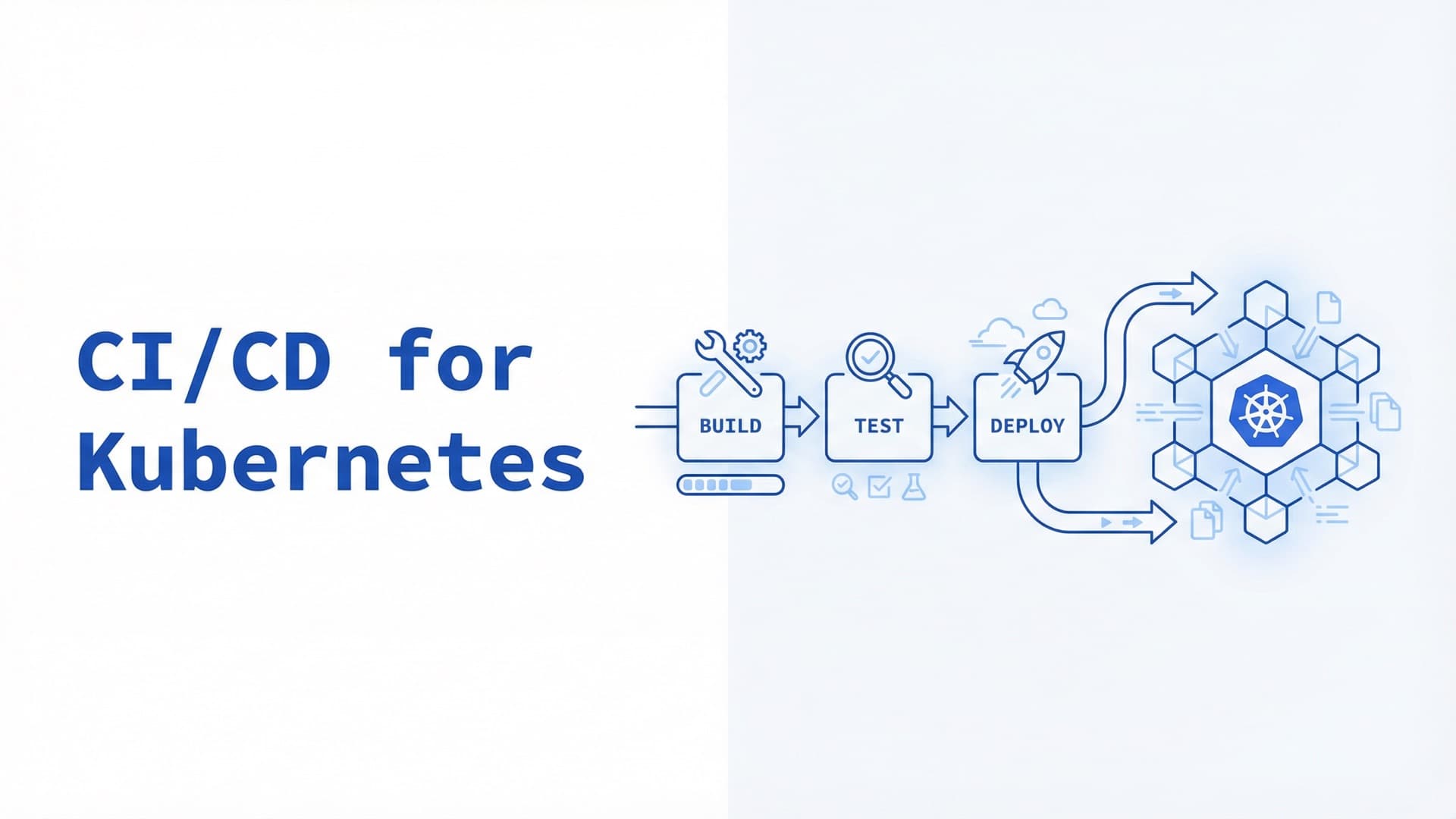
CI/CD for Kubernetes
Continuous Integration (CI) and Continuous Deployment (CD) are essential practices in modern software development that allow teams to integrate changes and...
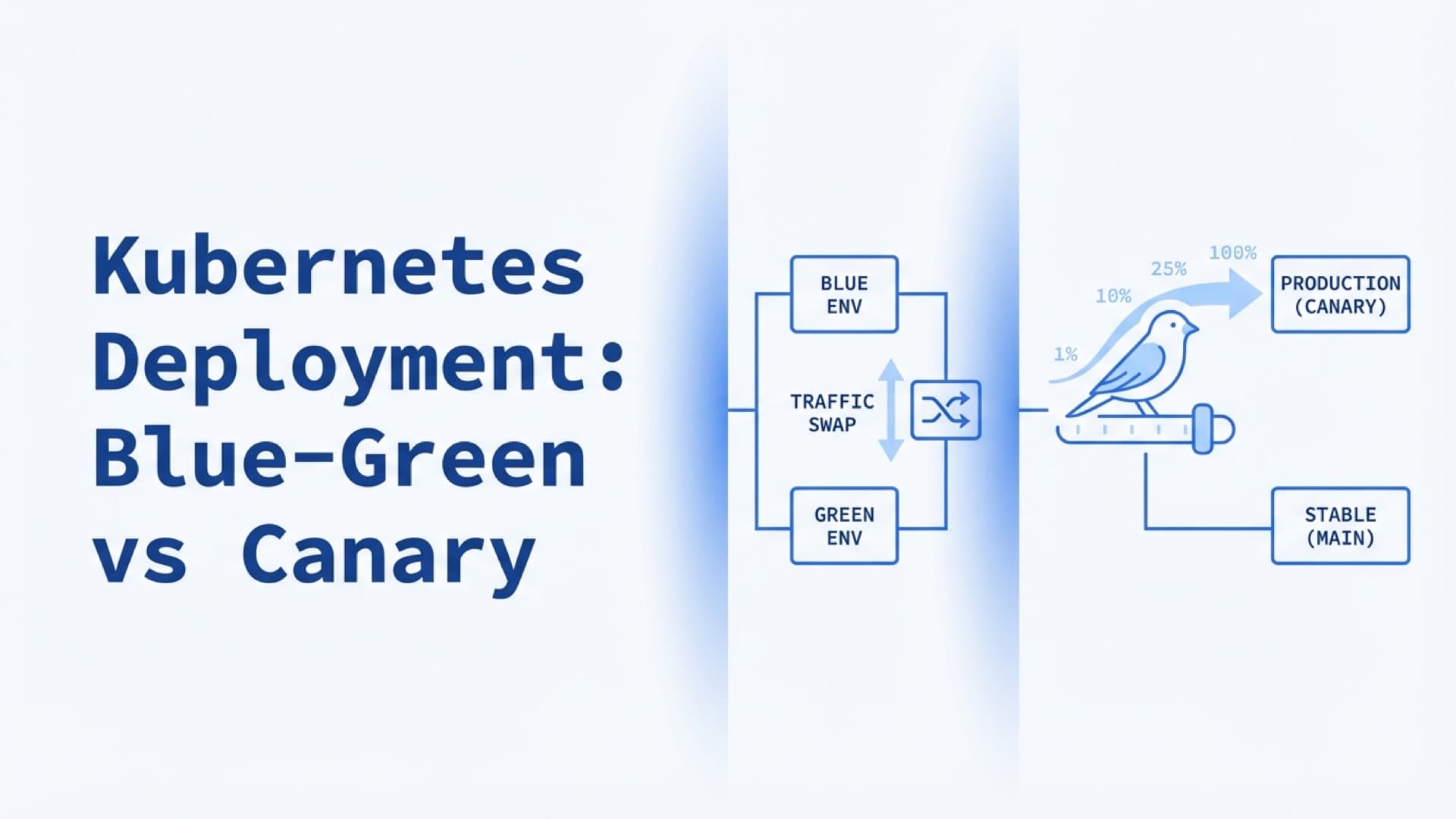
Kubernetes deployment strategies: Blue-Green vs. Canary
Understanding and implementing the best practices for deploying applications using Kubernetes is essential for ensuring application availability, minimizing...
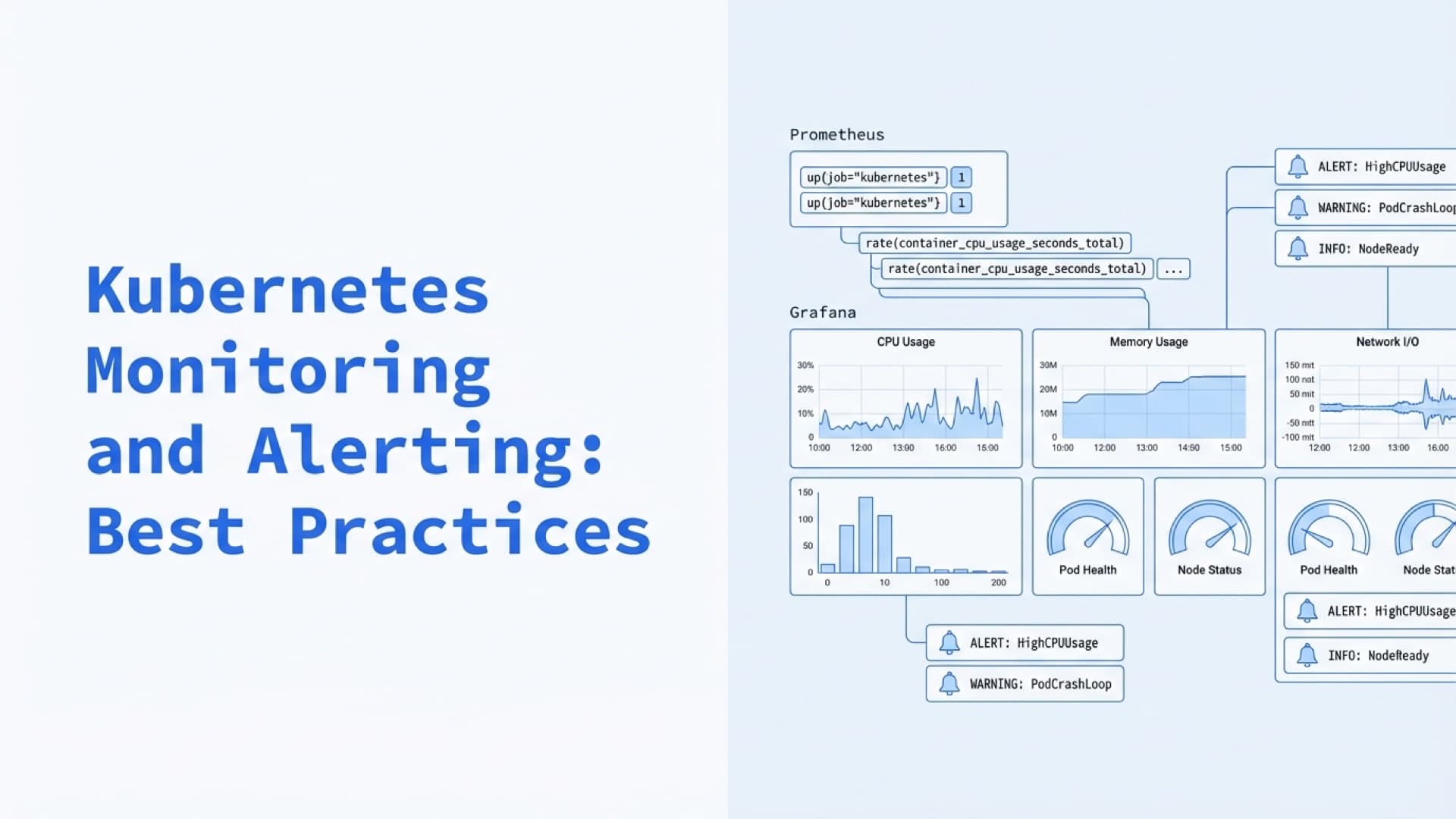
Kubernetes Monitoring and Alerting: Best Practices
Kubernetes has rapidly become the go-to solution for container orchestration, simplifying the management and deployment of applications at scale.
You might also need
Tell us what slows you down
A few lines are enough. We will tell you whether we can help and what we would look at first. If it fits, we start with read-only access and a written list of what to fix first.
- What you run and where: cloud, bare metal or both
- What hurts: releases, outages, costs or a single point of failure
- Who on your side owns the infrastructure today