Your engineers use AI in a chat window. Your infrastructure doesn't know it exists.
We connect AI agents to the systems you already run (monitoring, logs, CI/CD, backups, tickets) and build LLM features into your product. Our own infrastructure team works this way on a client's production systems.
The challenge
AI stops at the chat window
Engineers paste logs into a chatbot and copy answers back. Nothing is connected to your monitoring, CI/CD or ticket queue, so every task starts from zero.
Nobody trusts an agent near production
No limits on what it can touch, no approval step, no record of what it did. So the agent stays in a sandbox and the work stays manual.
Every task pays for a fresh plan
Without runbooks the model works out the steps from scratch each time: slower, more tokens, and a different result on every run.
LLM features stall after the demo
A prompt that works in a notebook still needs versioning, a way to switch models and a rollback. That's engineering, not prompt writing.
How we help
MCP servers for your systems
Model Context Protocol servers that let agents read and act on your stack: Grafana, VictoriaLogs, ClickHouse, GoCD, Proxmox, Jira, your wiki. Our GoCD MCP server is open source (github.com/Ivinco/gocd-mcp).
Agent runbooks with a human in the loop
Step-by-step skills for routine ops work. The agent picks up a ticket, reads the docs, does the work and asks before anything risky. In one recorded run, a backlog ticket cost about $3 in model usage against roughly six hours of an engineer's time.
LLM features in your product
Query builders and assistants inside your product, with versioned system prompts and the option to switch models when one gets too slow or too expensive.
Agent-ready repositories
A CLAUDE.md in every repository, written and cross-reviewed by the engineers who own the code, so agents follow the same conventions as your team. We rolled this out across 17 repositories for a long-term client.
Our infrastructure team runs a long-term client's production systems with Claude connected through MCP servers for Grafana, VictoriaLogs, ClickHouse, GoCD and Proxmox.
Tech stack
Frequently asked questions
- What is an MCP server?
- MCP (Model Context Protocol) is an open standard that lets an AI agent call tools and read data from your systems through a defined interface. An MCP server for Grafana, for example, lets an agent query dashboards and alerts directly instead of someone pasting screenshots into a chat. You decide which actions it exposes and with what permissions.
- Is it safe to let an AI agent work on production infrastructure?
- Only with guardrails. We give each MCP server only the permissions its tasks need, keep a human approval step before anything changes, and review what the agent produces before it ships. Agents speed up routine work; they don't replace the engineer who owns the system.
- How much does it cost to run AI agents for ops work?
- Model usage is usually small next to engineer time. In one recorded run, a routine backlog ticket cost about $3 in model usage against roughly six hours of an engineer's time. The real cost is the engineering around it: tool access, runbooks and review.
From our blog
View all posts →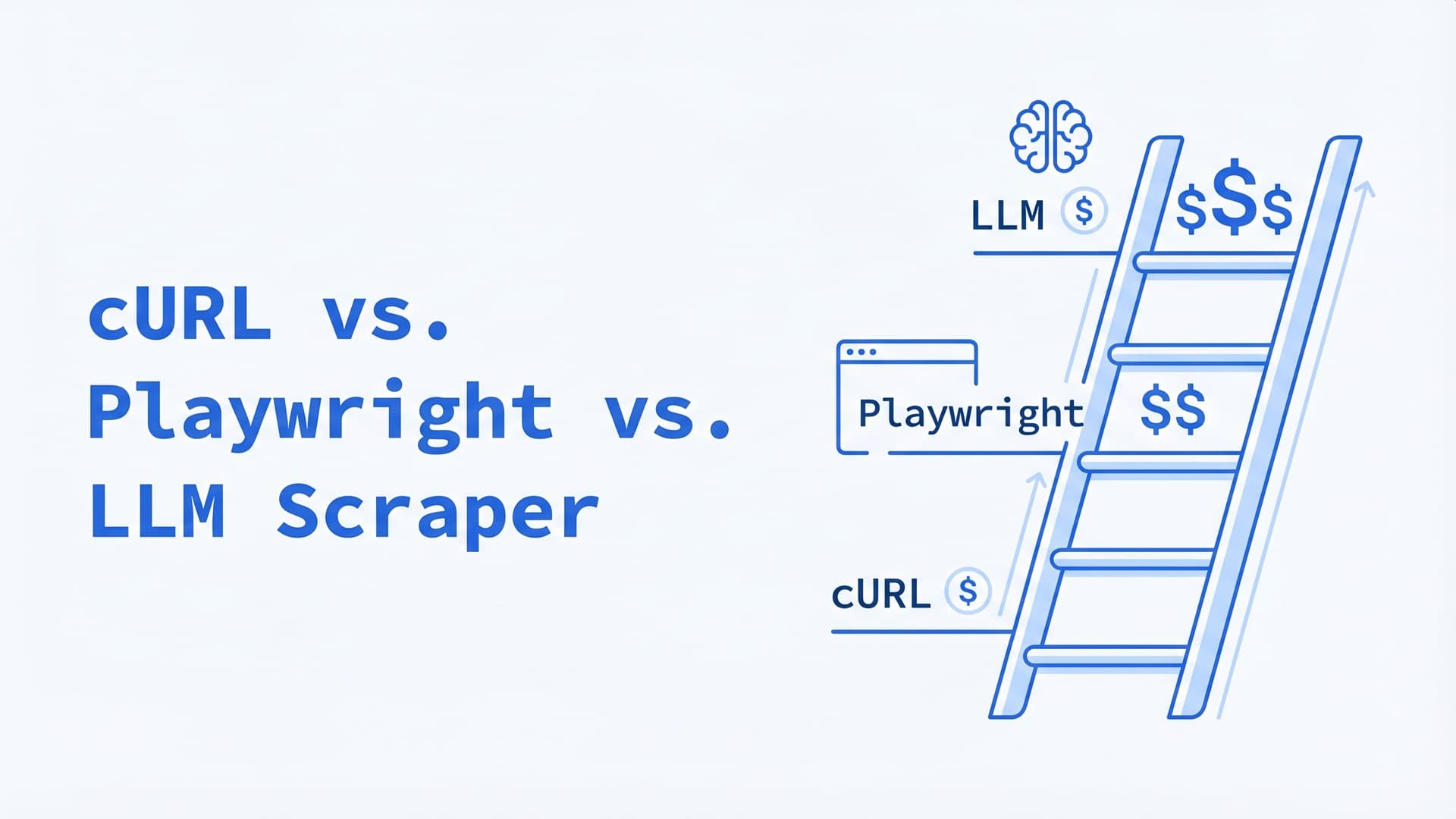
cURL vs. Playwright vs. LLM Scraper: A Decision Tree for 2026
Same scraping job costs $5, $150, or $6,000/month depending on the tool you pick. A 4-step decision tree for choosing between HTTP clients, headless browsers, and LLM-native scrapers in production.
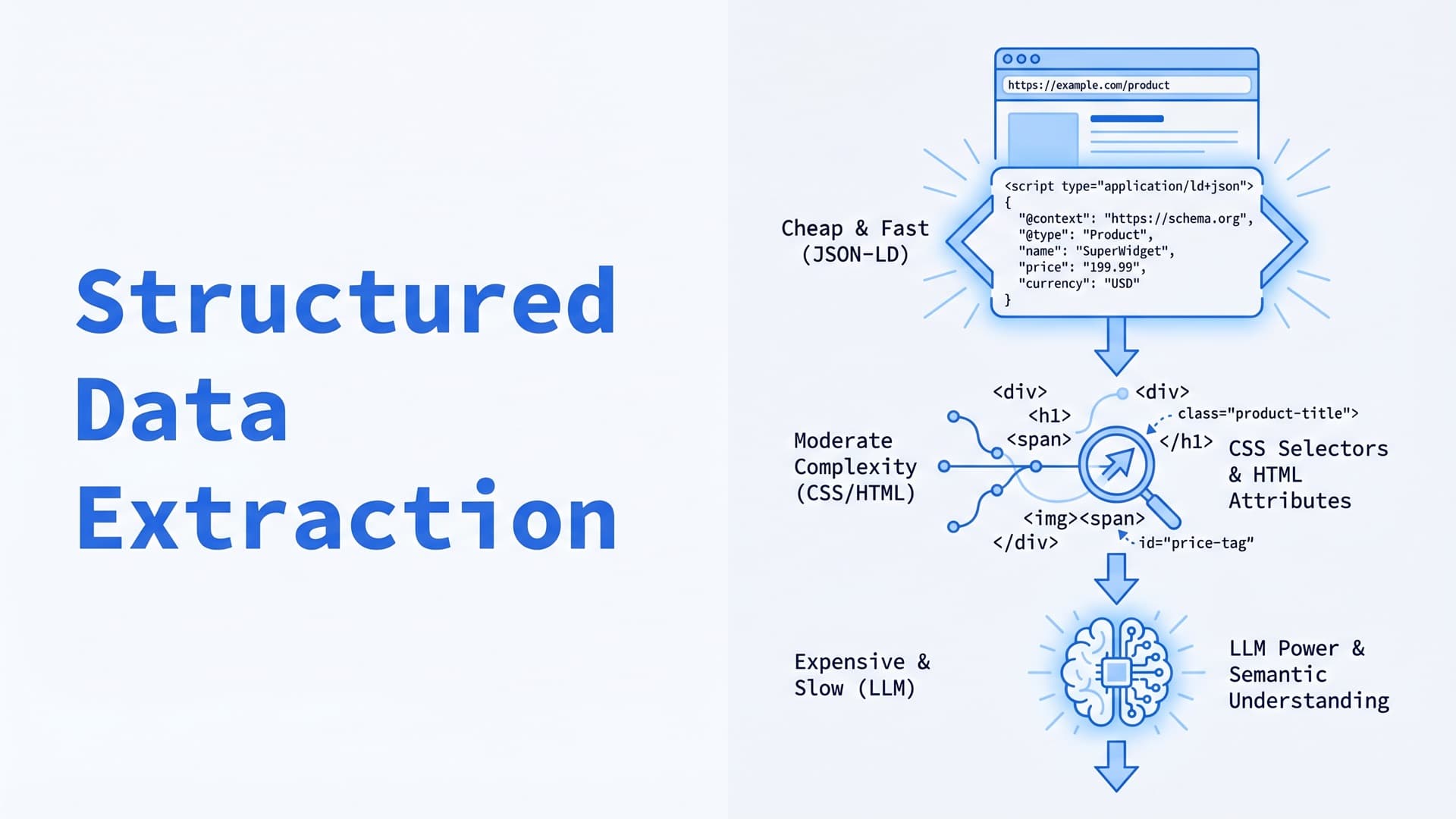
Structured Data Extraction: JSON-LD, Schema.org, and When to Use LLMs
Most extraction pipelines pay to rebuild data that's already in the page. JSON-LD, Microdata, selectors, and LLM extraction — the three-rung ladder and when each rung wins.
You might also need
Ready to talk?
No pitch deck. No sales team. You'll talk directly to an engineer who's done this before.