Your MVP works on localhost. It won't survive real traffic.
No tests, no CI/CD, no monitoring. You vibe-coded it and it works — but shipping to paying customers is a different game. We close that gap.
The challenge
It works but it won't scale
You vibe-coded an MVP and it does what it should — but it's held together with duct tape and optimism.
No tests, no monitoring, no pipeline
Your prototype has no automated tests, no deployment pipeline, no way to know when something breaks.
Hiring a full team is too expensive
You need production engineering but you're not ready to hire 5 people. You need a team on demand.
How we help
Architecture review
We look at what you have. Honestly tell you what's solid and what needs to change. No unnecessary rewrites.
Production hardening
Tests, CI/CD, monitoring, error handling, security. The boring stuff that keeps products alive and customers happy.
Infrastructure setup
Kubernetes, cloud, databases, CDN. Everything your product needs to handle real traffic without falling over.
Ongoing support
We don't disappear after launch. Monthly retainer for maintenance, scaling, and new features as you grow.
We've built production systems since 2009. We know the difference between 'it works' and 'it works at scale.' Your MVP gets the same engineering rigor as our enterprise clients.
Tech stack
Frequently asked questions
- How much does it cost to turn an MVP into a production-ready product?
- It depends on scope. The biggest cost drivers are security hardening, CI/CD setup, monitoring infrastructure, database migration to production-grade systems, and rewriting any parts that were built for demo speed rather than reliability. We quote after reviewing the codebase.
- How do I know if my MVP needs a rewrite or just fixes?
- Rewrite if: your stack doesn't scale (SQLite backing a SaaS, no horizontal scaling), there's no CI/CD, tests don't exist, or the code was generated by an AI tool without review. Fix in place if: the architecture is sound, there's existing test coverage, and the issues are specific bottlenecks rather than structural. We do a free 30-minute review to help you decide.
- Can you work with AI-generated code from Cursor or Copilot?
- Yes. The common patterns in AI-generated codebases: missing input validation, no error handling, tests that don't actually test, and database schemas designed for one table per feature. We refactor, add tests, harden the infrastructure, and document what's actually there. You keep the speed advantage of AI-assisted development without the production debt.
- How long does MVP to production take?
- It depends on the codebase. The work runs in four phases: audit and architecture review; refactoring, tests, security hardening and CI/CD; monitoring, load testing, database migration and documentation; then production cutover and handoff. Simpler MVPs finish faster; complex ones with multiple integrations take longer.
From our blog
View all posts →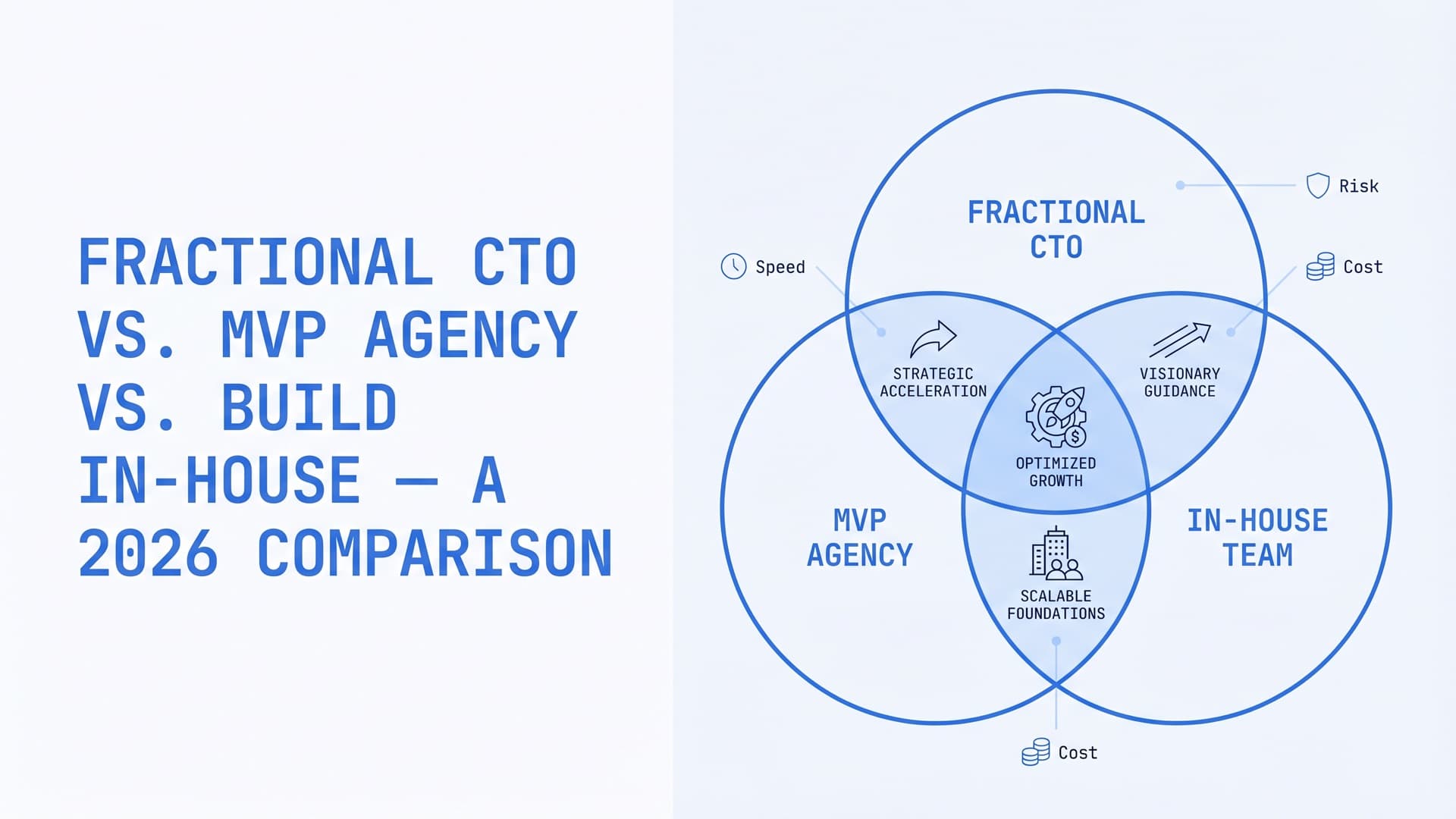
Fractional CTO vs. MVP Agency vs. Build In-House — A 2026 Comparison
Fractional CTO solves "who decides?" MVP agency solves "who builds?" In-house solves "who stays?" Three options, six dimensions, and the combinations that actually work. The single-option pick is the wrong default.
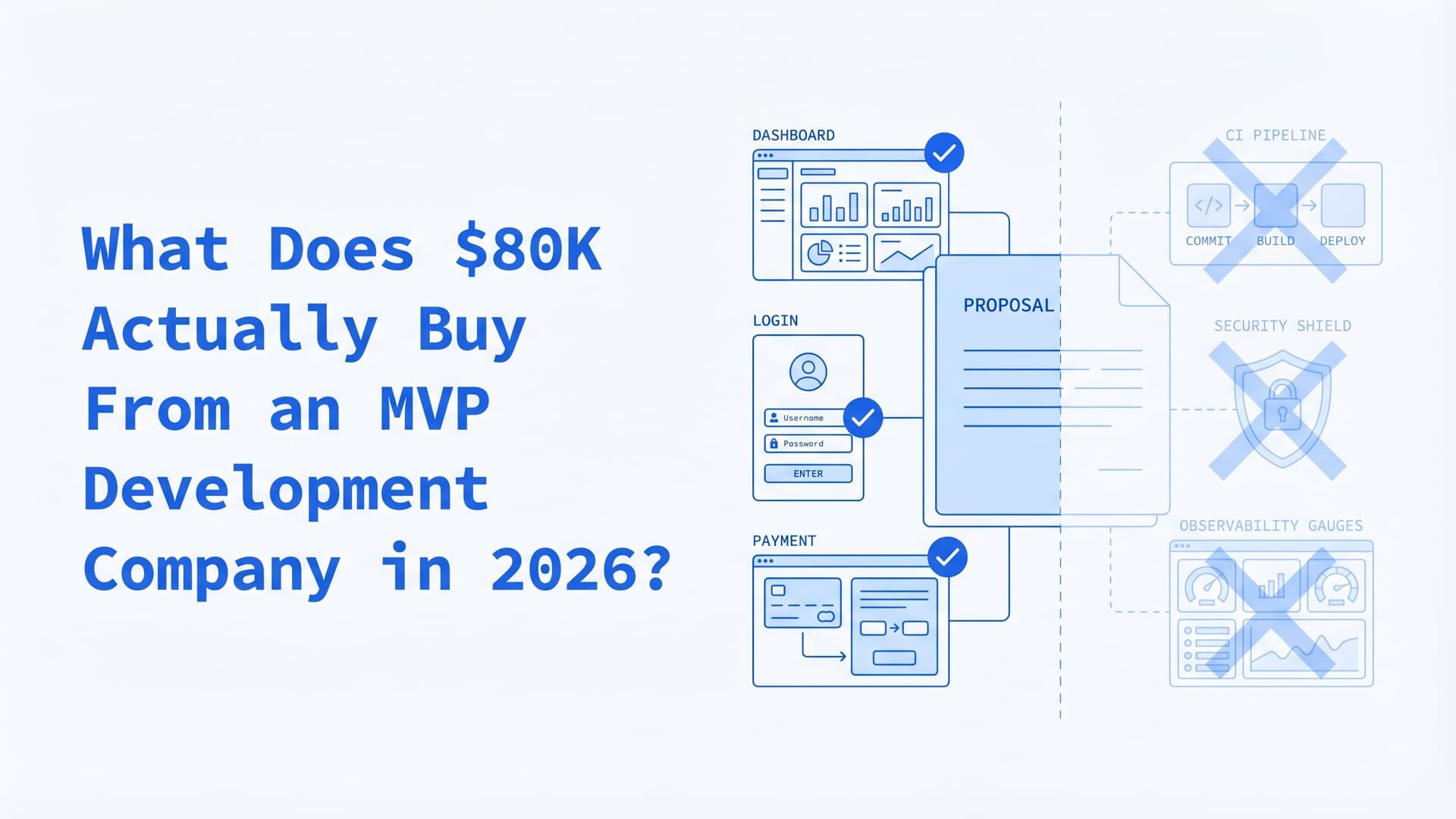
What Does $80K Actually Buy From an MVP Development Company in 2026?
At $150/hour, $80K buys 533 engineering hours. At $70/hour, 1,143. Same visible scope, 2x labor spread. Here's the math most founders never see — and the Invisible Line Item that tells the difference.
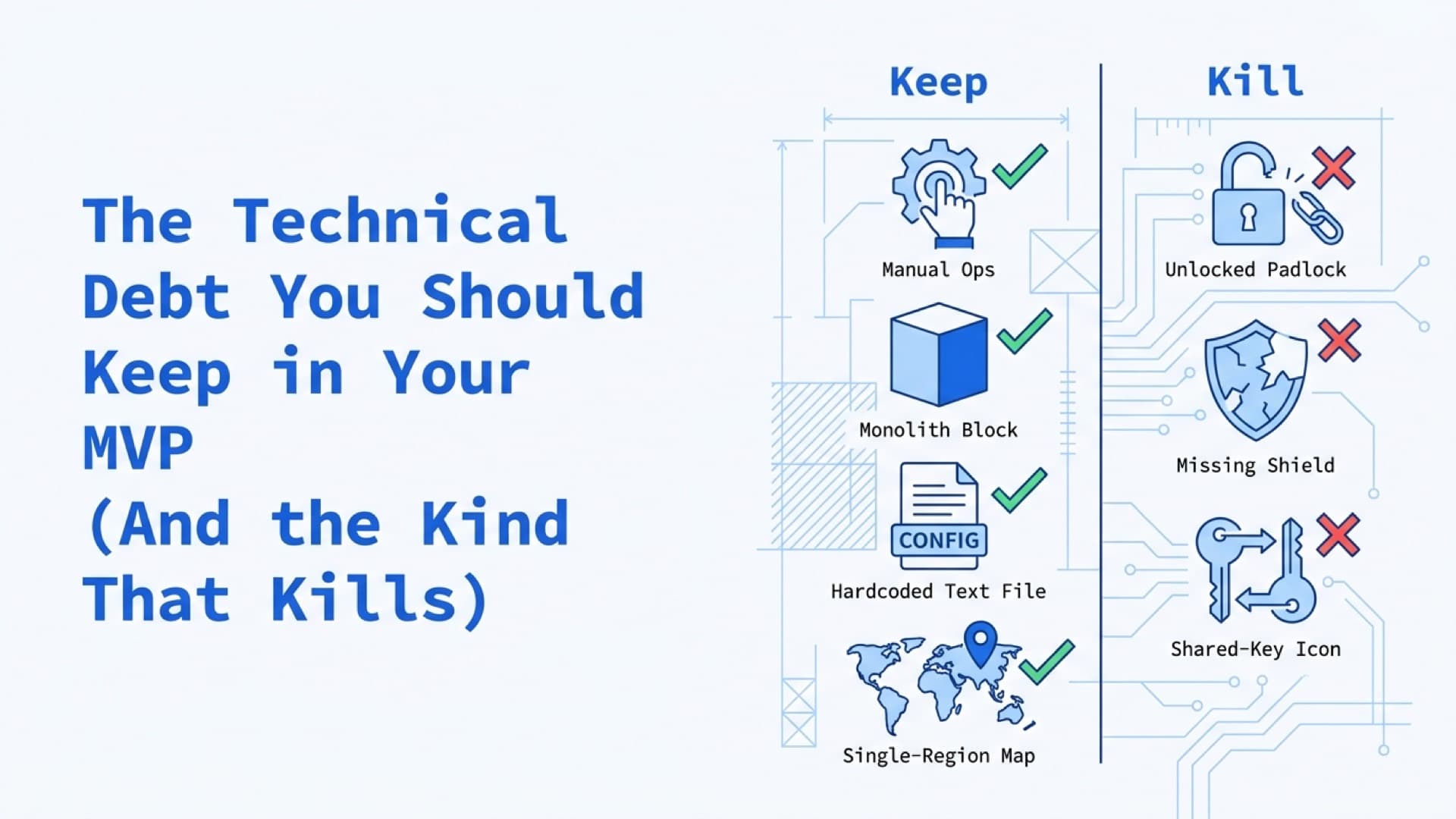
The Technical Debt You Should Keep in Your MVP (And the Kind That Kills)
Good debt trades speed now for bounded cost later. Bad debt hides a step function that fires at the worst moment. Five shortcuts to keep forever, five that compound silently, and a better rule than the 20% sprint tax.
You might also need
Ready to talk?
No pitch deck. No sales team. You'll talk directly to an engineer who's done this before.