Your proxy provider goes down. Your data stops. Nobody has a plan B.
Managed scraping infrastructure with multi-provider proxy orchestration, automatic failover, and intelligent routing. One outage never takes you offline.
The challenge
Single provider, single point of failure
Your proxy provider goes down and you lose data — and revenue. No failover, no plan B.
Dropping success rates
Captchas, blocks, incomplete data. Success rates are falling and you're manually debugging why.
Burning money on failed requests
You're paying for proxy traffic that returns errors. No intelligent routing, no cost optimization.
How we help
Multi-provider proxy orchestration
Connect to all major proxy providers through one layer. Automatic failover, intelligent routing, zero single points of failure.
Cost optimization
Route each request to the cheapest provider that works for that target.
Success rate maximization
Fingerprint management, session optimization, provider-specific tuning. More successful requests, less wasted traffic.
Vertical expertise
Price monitoring, SERP scraping, social media data, e-commerce intelligence. We know the patterns for each use case.
Built on years of infrastructure experience for data collection companies. We manage the scraping infrastructure so you can focus on what you do with the data.
Tech stack
Frequently asked questions
- What is web scraping infrastructure?
- Web scraping infrastructure is the stack of services that makes large-scale data collection reliable and cost-effective — proxy orchestration across multiple providers, fingerprint and session management, request queuing and rate limiting, retry logic with exponential backoff, and storage pipelines for the collected data. At scale, it's the difference between 60% and 95% success rates on your scrapers.
- Why use multiple proxy providers instead of just one?
- Single-provider setups create single points of failure — when that provider has an outage, rate limit, or IP block, your scrapers stop. Multi-provider orchestration routes requests to the provider most likely to succeed for each target, fails over automatically, and optimizes cost by picking the cheapest working provider.
- How do you handle captchas and blocks?
- We handle blocks through fingerprint rotation (browser characteristics, TLS signatures, header ordering), residential and mobile IP rotation for harder targets, captcha solving services for the targets that still trigger them, and vertical-specific tuning — what works for e-commerce scraping is different from what works for SERP scraping. We tune the approach per target.
- What happened to Scrapoxy? What should I use instead?
- Scrapoxy was an open-source proxy orchestration tool that hit end-of-life in 2024. We offer a managed alternative that covers the same use cases — multi-provider routing, cost optimization, success rate monitoring — without the operational overhead of running it yourself. We also support migration from existing Scrapoxy setups.
From our blog
View all posts →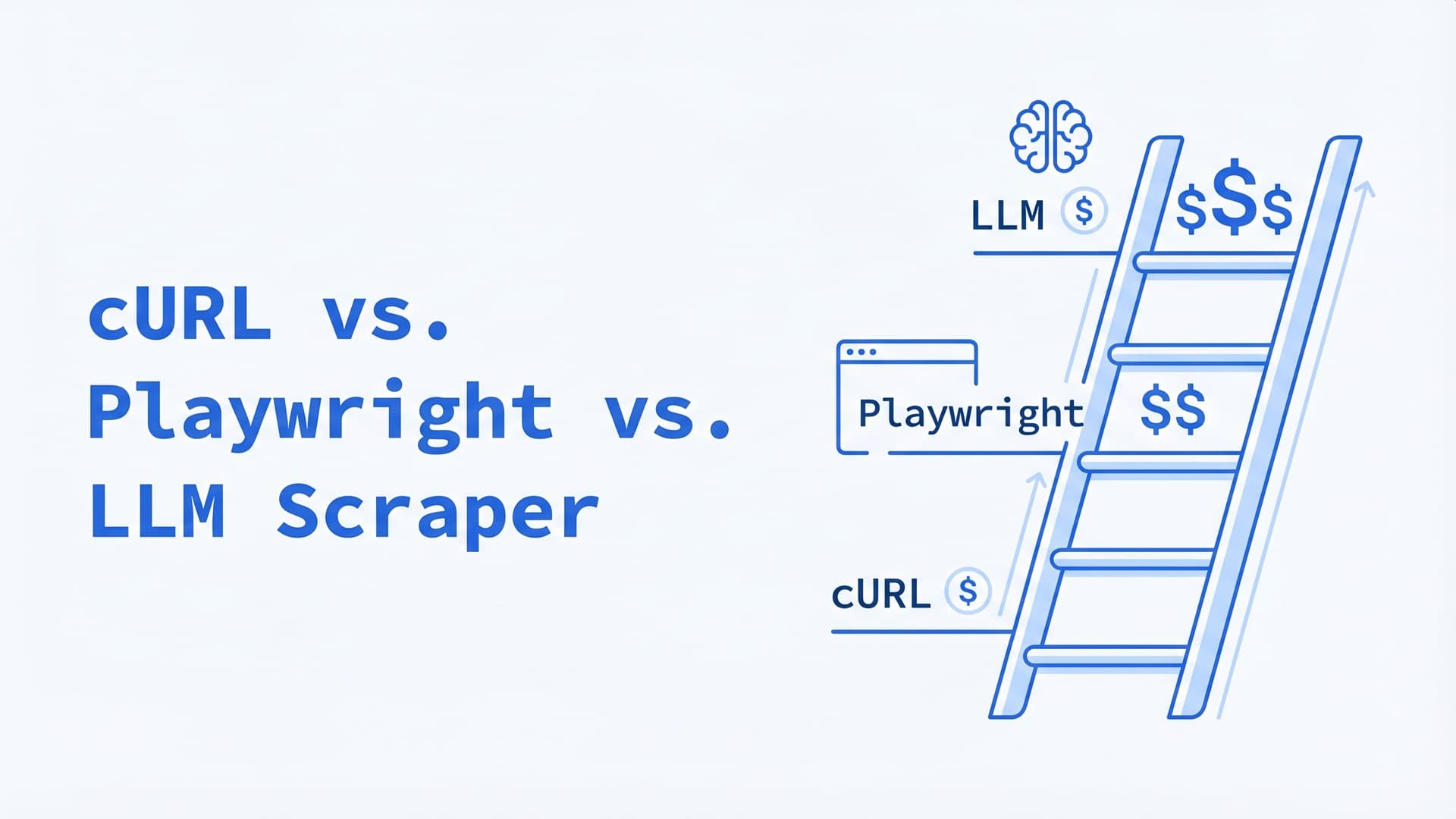
cURL vs. Playwright vs. LLM Scraper: A Decision Tree for 2026
Same scraping job costs $5, $150, or $6,000/month depending on the tool you pick. A 4-step decision tree for choosing between HTTP clients, headless browsers, and LLM-native scrapers in production.
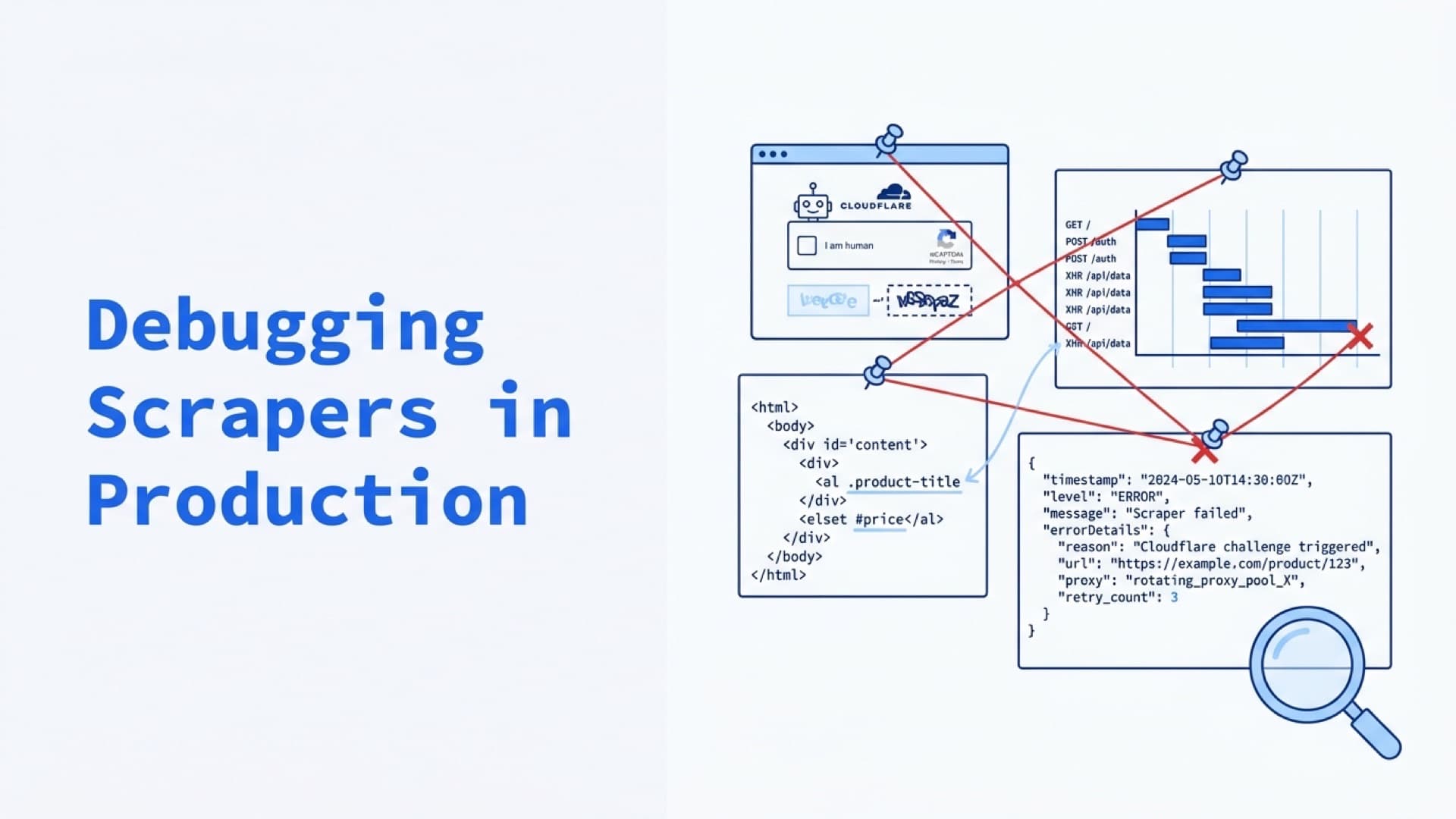
Debugging Scrapers in Production: Logs, Screenshots, Video Replay, and Failure Forensics
Status codes aren't evidence. Screenshots, DOM snapshots, Playwright traces, and structured logs are. The Evidence Bundle pattern for turning scraper failures from hours of investigation into dashboard queries.
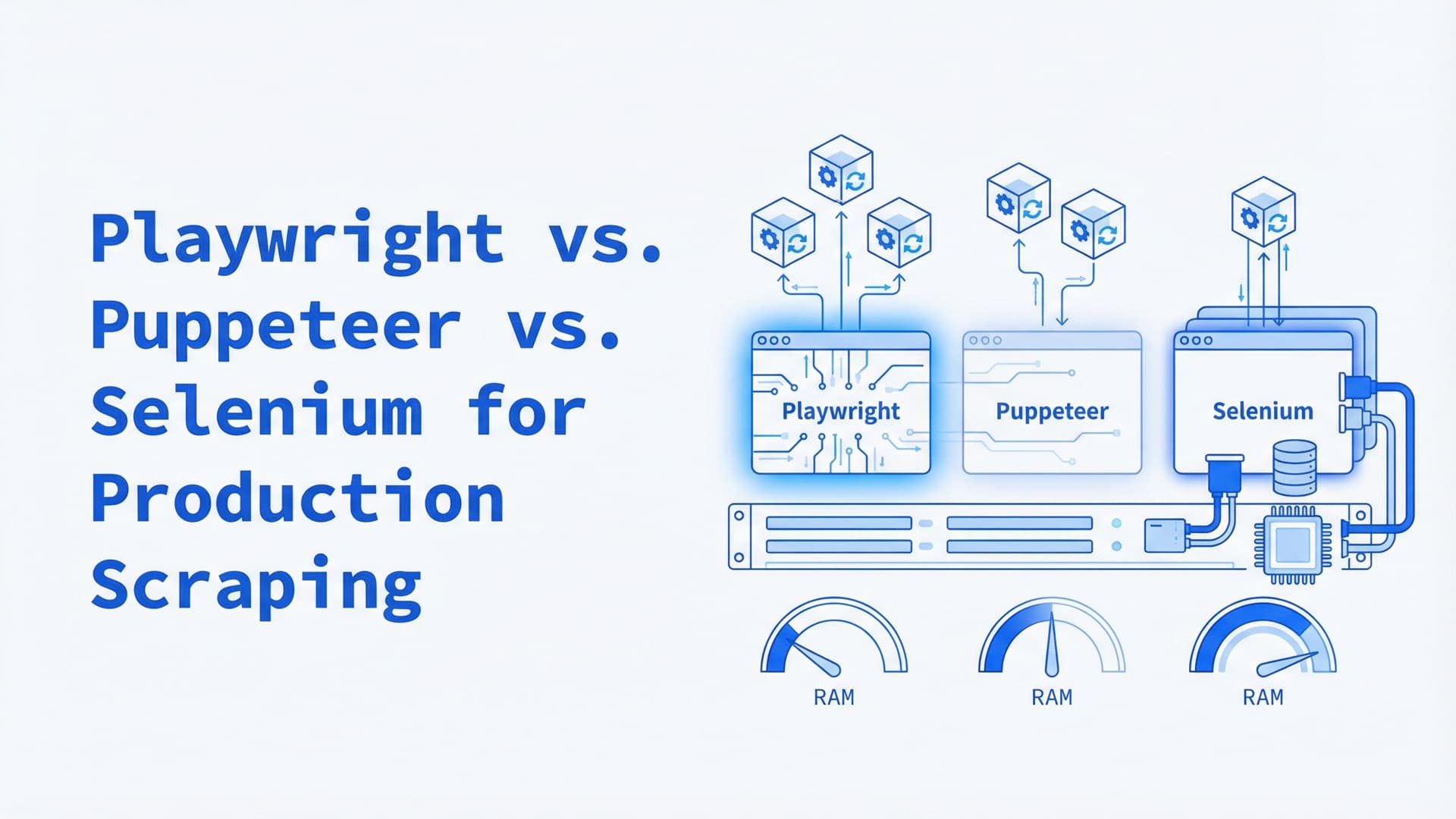
Playwright vs. Puppeteer vs. Selenium for Production Scraping: A 2026 Comparison
Most headless browser comparisons test on localhost. Production scraping at 100+ concurrent sessions reveals different winners — here's the data on memory, detection, and Kubernetes deployment.
You might also need
Ready to talk?
No pitch deck. No sales team. You'll talk directly to an engineer who's done this before.