Dedicated software development teams
A dedicated development team that runs what it builds.
A lead engineer owns delivery, the team shares your context, and the team that writes your code also deploys and monitors it. Our longest-running client has worked with us for 15 years.
A dedicated development team is a group of engineers that works on your product for months or years under a lead who plans and runs the work. You set the roadmap and accept the results, and the provider handles hiring, management and payroll.
With us, the lead engineer is your single contact. The lead turns your roadmap into tasks and answers for what ships. That is the difference from staff augmentation, where your own leads plan the work and ours takes tasks from your backlog.
Our teams work on infrastructure-heavy products: data platforms, crawling and search, SaaS backends and the Kubernetes clusters under them. One example is a search API we built for Socialgist.
Why companies hire a dedicated development team
Building a team takes quarters
Hiring one engineer at a time takes longer than your roadmap allows.
Management you didn't plan for
You wanted engineers, and now you run standups, reviews, retention and HR.
Contractors who don't share context
Each freelancer knows their own piece. Nobody owns the whole system, and every handover loses something.
What you get with Ivinco
A lead who owns delivery
Your lead plans the work, reviews the code and answers for the result. You set the roadmap and accept what ships.
Knowledge that stays in the team
Several engineers know each part of your system, so vacations and departures don't stop the work.
Runs what it builds
The team that builds your product also deploys and monitors it. By agreement, it takes on-call, up to 24-hour coverage under an SLA.
Your code, your access
You have access to all code, environments and documentation, so you can move the work in-house under the notice terms in your contract.
Who is on the team
Lead engineer
Your contact. Runs planning with you and decides who on the team takes each task.
Backend and web developers
Services and APIs in Python, Go, PHP and Java, and web interfaces in React.
DevOps and SRE
Kubernetes, CI/CD, monitoring, and on-call by agreement. See DevOps consulting.
Data and database engineers
Pipelines, web data collection, ClickHouse, MySQL and PostgreSQL.
Search engineers
Full-text search on Manticore Search, Elasticsearch and other engines.
We add capacity on request as the roadmap grows. Need a role that isn't here? Describe the task and we will tell you whether we can take it. The one thing we don't do in-house is mobile development.
How we start a dedicated team
- 1
Scope call
Tell us about the product, the roadmap and what the team should own.
- 2
Meet your lead
Before anything is signed, you meet the lead engineer who will run your team.
- 3
Onboarding
The team gets access, reads the code and the documentation, and agrees with you how work is planned and accepted.
- 4
Plan, build, review
The lead runs the planning and shows you what shipped. When the roadmap changes, you tell the lead and the plan changes with it.
Dedicated team vs. staff augmentation, fixed-price projects and hiring
| Model | Who runs the work | Good fit when | Trade-off |
|---|---|---|---|
| Dedicated team | Our lead plans it and answers for the result | You want a product or a function built and run for the long term | Less day-to-day control over how the work is done |
| Staff augmentation | Your leads plan it; our lead takes tasks from your backlog | You have a team and a process and need more capacity | Your leads carry the planning |
| Fixed-price project | The vendor, against an agreed result | The scope is clear and has a deadline | Each change needs a new agreement |
| Hiring in-house | You | You need the team permanently and can wait for the hires | Hiring takes quarters, and you carry management and retention |
We work in the first three models: see staff augmentation, and MVP development for fixed-price work. The longer comparison is in our post on dedicated teams vs. staff augmentation.
For our longest-running client, our team builds the product and runs the infrastructure under it. Across all clients, we have managed more than 1,350 production servers.
How dedicated team pricing works
A dedicated team is billed the same way as our staff augmentation: the team's hours against a monthly volume that you can raise or lower as the roadmap changes. What differs is who plans the work. We work on a single project or on a yearly contract.
The fee covers the engineers, their equipment, management and our overhead, with no recruiting fee on top.
Compare it with building the same team in-house: salaries, benefits, recruiting, equipment, management time, and the months before the team is complete.
Stack our teams work in
Frequently asked questions
- What is a dedicated development team?
- A dedicated development team is a group of engineers who work on your product for a long period under a lead who runs the work. The provider hires, manages and pays the engineers, and you decide what they build. It suits products that need a whole team rather than one extra engineer.
- Does the team work only on our product?
- Your lead and an agreed monthly volume of the team's time are yours, and the engineers who do the work know your systems. We don't rent out named engineers who work for one client only; that is what keeps the work going when someone is away.
- How much does it cost to hire a dedicated development team?
- Most providers charge a monthly rate per engineer. We bill the team's hours against a monthly volume that you can raise or lower. The roles, the stack and the coverage hours set the price. There is no recruiting fee. We quote after the first call. For market rates, see the true cost of a dedicated team.
- How do you hire a dedicated development team?
- Write down what the team should own and the skills the work needs. Talk to a few providers and meet the lead who would run your team. Ask how they keep knowledge when people leave and who runs the infrastructure. Then start with a defined first milestone.
- How is a dedicated team different from staff augmentation?
- In staff augmentation your leads set the priorities and our lead takes tasks from your backlog. A dedicated team owns a product or a function: our lead plans and runs the work, and you set the roadmap and accept the results.
- How fast can a team start?
- We agree on a start date on the first call, once we know the stack and the work.
- When is a dedicated team the wrong choice?
- When the scope is fixed and has an end date, a fixed-price project fits better. When you are missing one skill, staff augmentation does. And if nobody on your side can set direction, no vendor fixes that.
- How big should a dedicated team be?
- As big as the work needs now. We start with the roles your roadmap needs and add capacity on request.
- Can the team work in our time zone?
- Our team is fully remote. We agree on the hours the team is online with you before we start. If you need it, we provide 24-hour coverage under an agreed SLA: how fast we respond to a problem, and how long systems can be down when the problem is in our scope.
- Who owns the code?
- You do. The contract assigns the code to you, and the team works in your repositories under your access rules.
- What happens when someone on the team leaves?
- The work continues. Your context lives with the lead and the team, so an engineer who already knows your systems takes over.
From our blog
View all posts →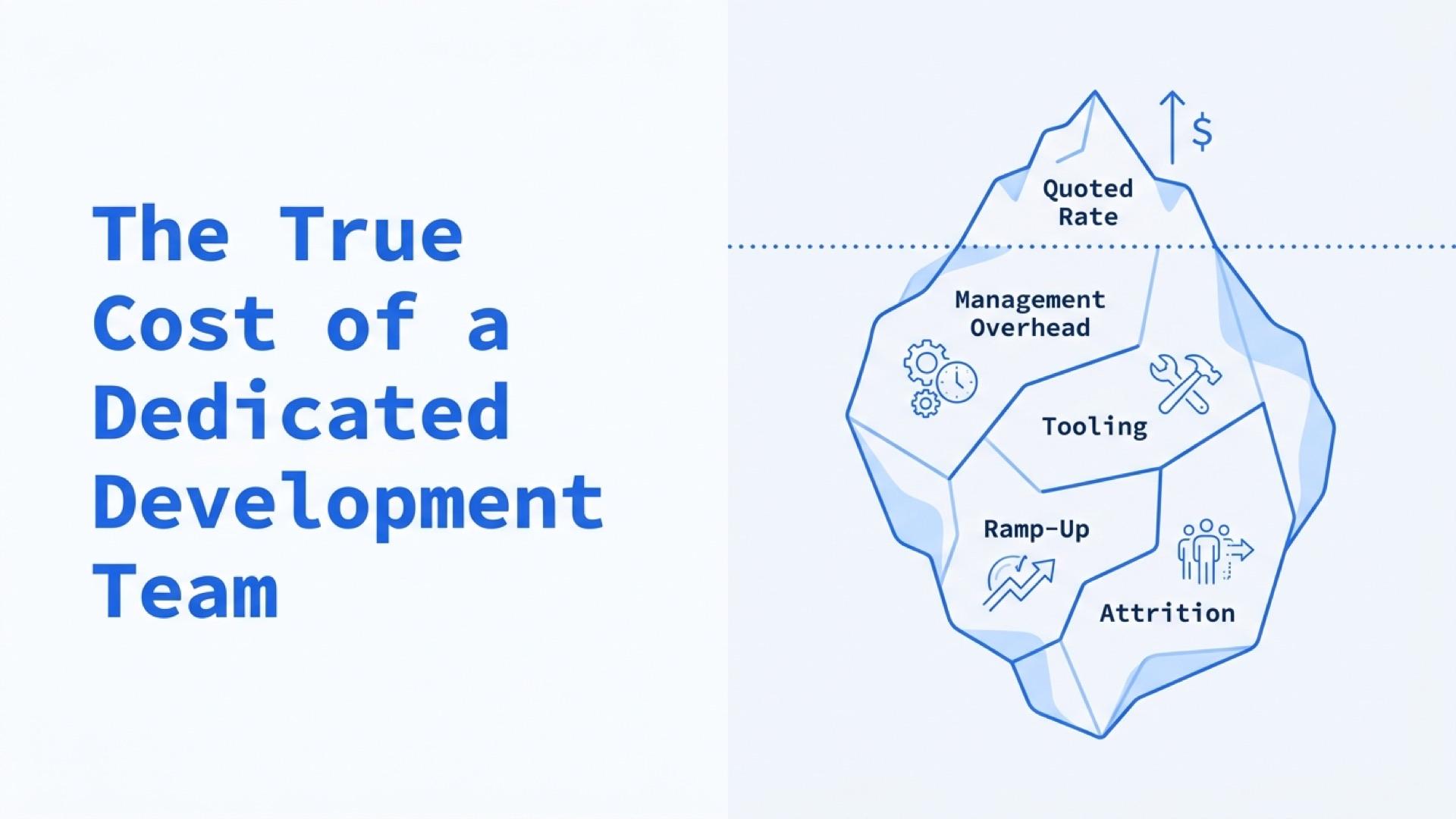
The True Cost of a Dedicated Development Team: Beyond the Hourly Rate
The quoted rate is only part of the real cost. Call it The Iceberg Rate. A breakdown of the five cost categories below the waterline, with the math on a four-engineer team.
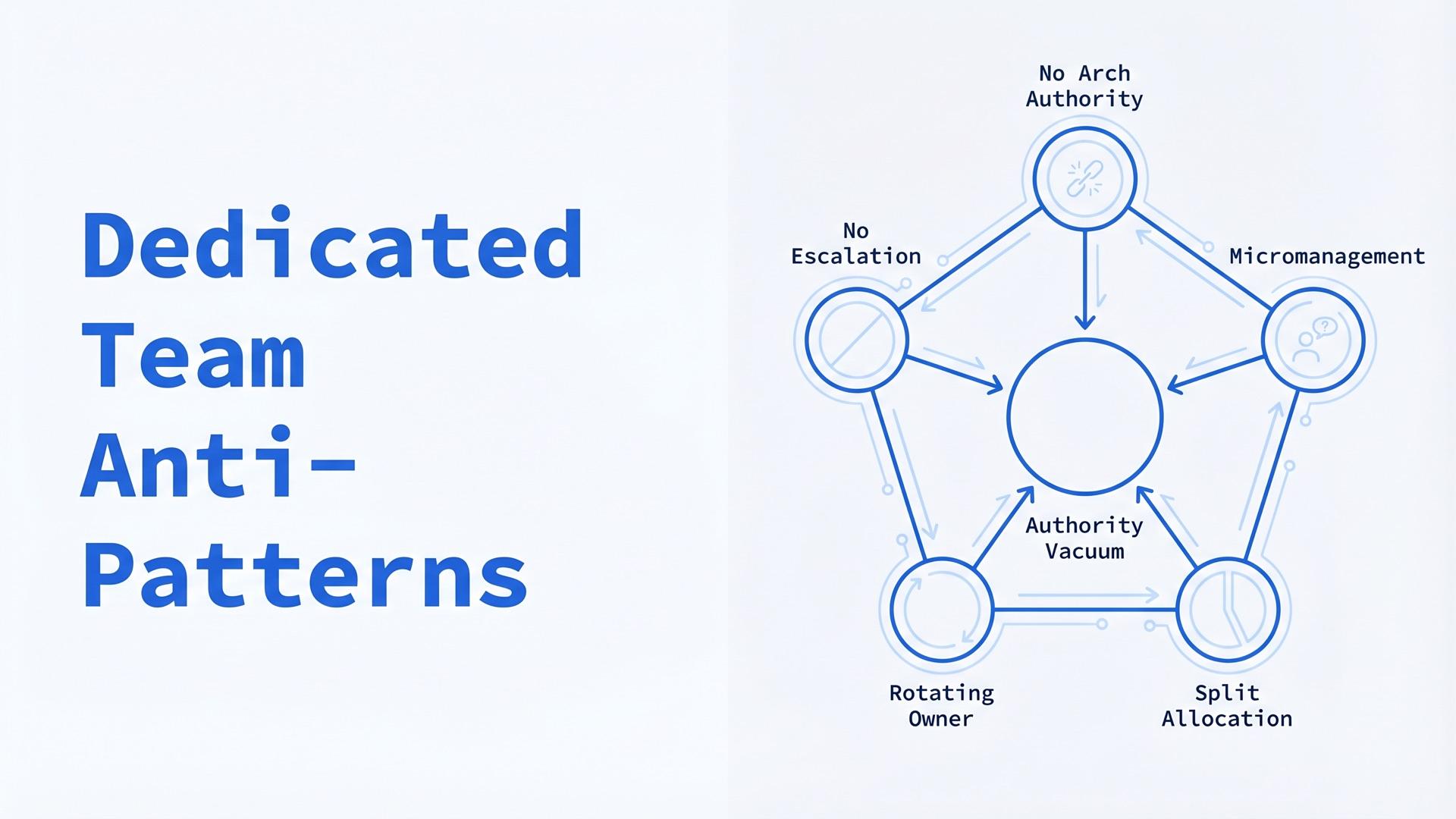
Dedicated Team Anti-Patterns: 5 Governance Failures That Kill Productivity
Five governance failures show up again and again in failing dedicated team engagements — and none of them are about engineer quality. The Authority Vacuum, the five patterns it creates, and how to diagnose which one you have.
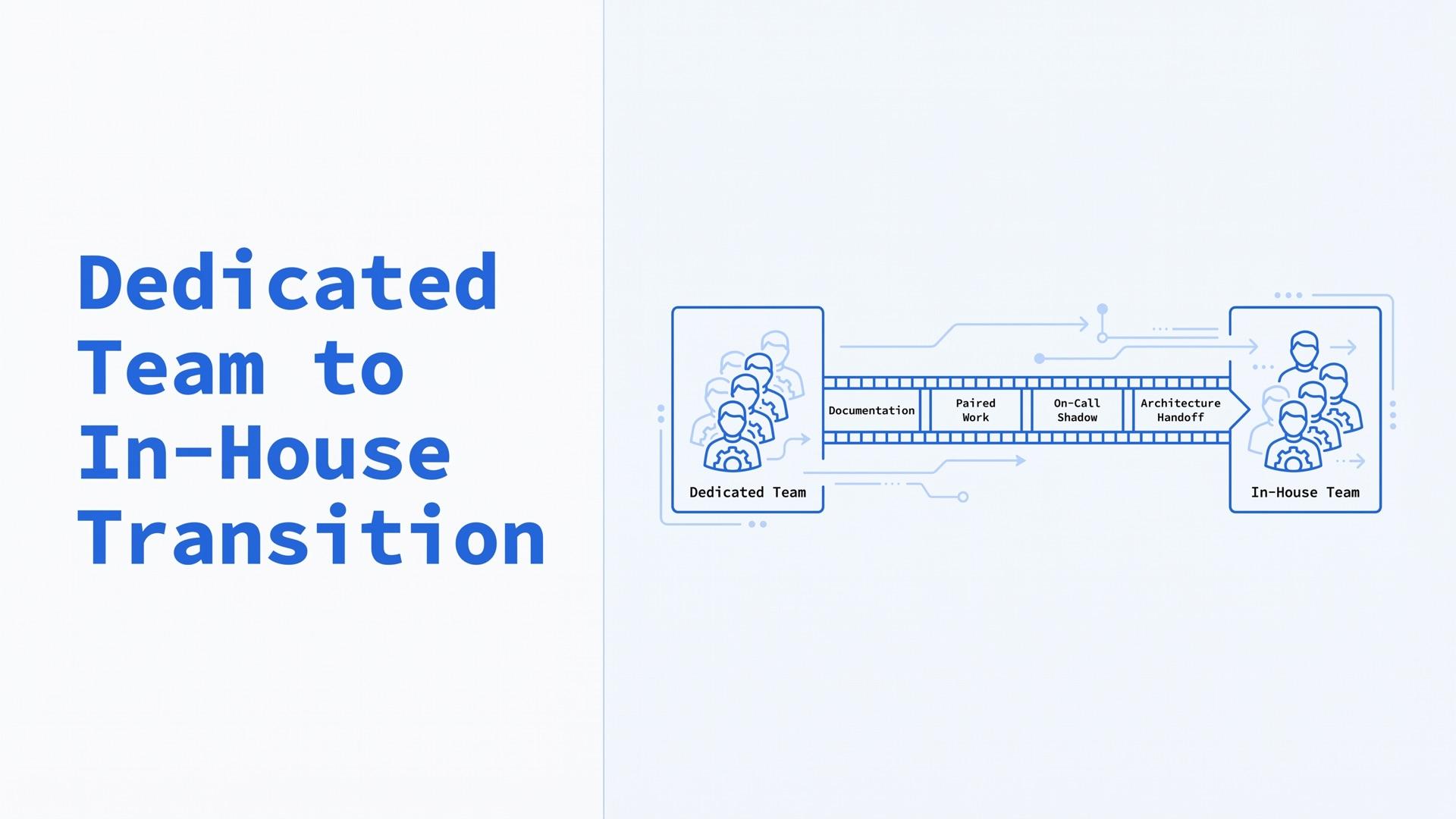
When to Bring a Dedicated Team In-House (And How to Do the Transition)
70% of executives have selectively insourced. The Knowledge Bridge is what separates successful transitions from expensive restarts. Signals, playbook, and the four failure modes that sabotage in-housing.
You might also need
Tell us what the team should own
A few lines are enough. We will tell you whether our team fits. If it does, you meet your lead before anything is signed.
- The product and what the team should own
- The skills the work needs today
- Your roadmap for the next two quarters