Your dev team ships code. Your ops team deploys it. Things break in between.
We're both teams in one. Same engineers write the code, deploy it, and answer the 3 AM page. Zero handoffs.
The challenge
Dev and ops are separate teams
Your outsourced dev team writes code but doesn't own deployments. Every release is a coordination nightmare.
Works locally, breaks in production
The gap between development and production environments causes bugs that only appear after deploy.
Slow release cycles
Manual deployments, missing CI/CD, no automated tests. Shipping takes days instead of hours.
How we help
Full-stack development
Backend, frontend, APIs. TypeScript, Python, Go, Java, Rust. We pick the right tool, not the trendy one.
Microservices architecture
We design and build services that scale independently. Clean boundaries, clear contracts, no spaghetti.
CI/CD pipelines
Automated testing, builds, and deployments. Ship multiple times per day with confidence.
The infrastructure advantage
We don't just write code. We deploy it, monitor it, and keep it running. Zero handoffs between writing and operating.
Our developers deploy their own code to infrastructure they manage. One team, zero handoffs. That's why things don't break between staging and production.
Tech stack
Frequently asked questions
- What does outsourcing software development include?
- Full-stack engineering services — backend, frontend, APIs, mobile, and the infrastructure that runs them. Unlike traditional dev shops, we also own deployment, monitoring, and production operations. One team, zero handoffs between writing code and running it.
- How is Ivinco different from a typical outsourcing company?
- Two things. First, every engineer is senior (8+ years average) — we don't hire juniors. Second, our developers also operate infrastructure. The person who writes your service is the same person who debugs it at 3am. No gap between dev and ops.
- What stacks do you work with?
- TypeScript, Python, Go, Rust, Java on the backend. React, Next.js, NestJS on the frontend. PostgreSQL, MySQL, MongoDB, Redis, ClickHouse for data. Kubernetes, Docker, Terraform, AWS, GCP, and bare metal for infrastructure. We pick the right tool, not the trendy one.
- How quickly can a team start?
- We match engineers from our existing roster based on your stack and domain. No recruiting cycle, no ramp-up gap — our engineers arrive with deep context in the technologies you already use. We agree on a start date on the first call.
From our blog
View all posts →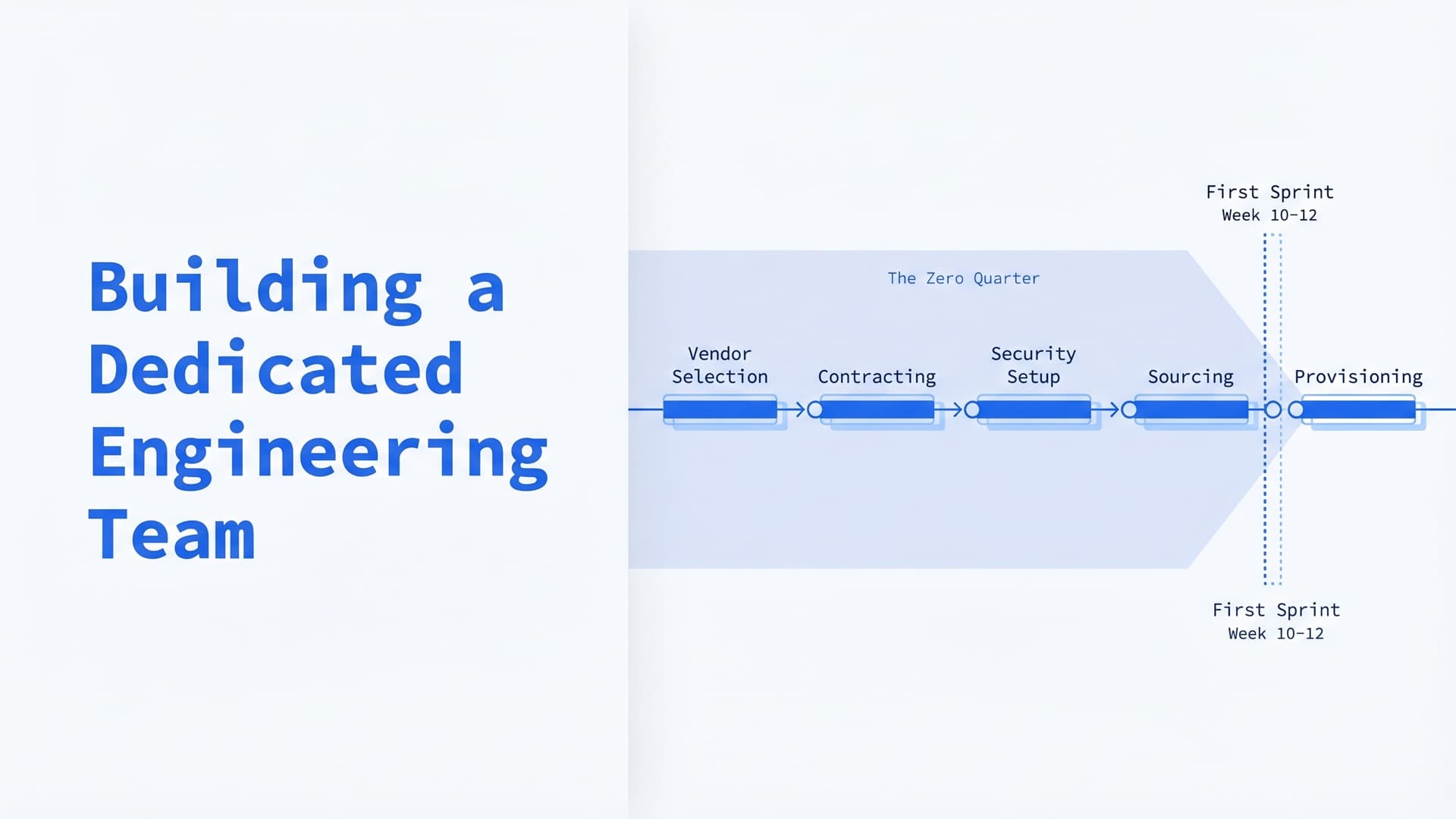
Building a Dedicated Engineering Team from Scratch: Timeline, Cost, and Mistakes
Vendor decks show 2 weeks. The real timeline is 10-16 weeks. Call it The Zero Quarter — everything between decision and first sprint. Cost model, worked example, and the five setup mistakes that compound.
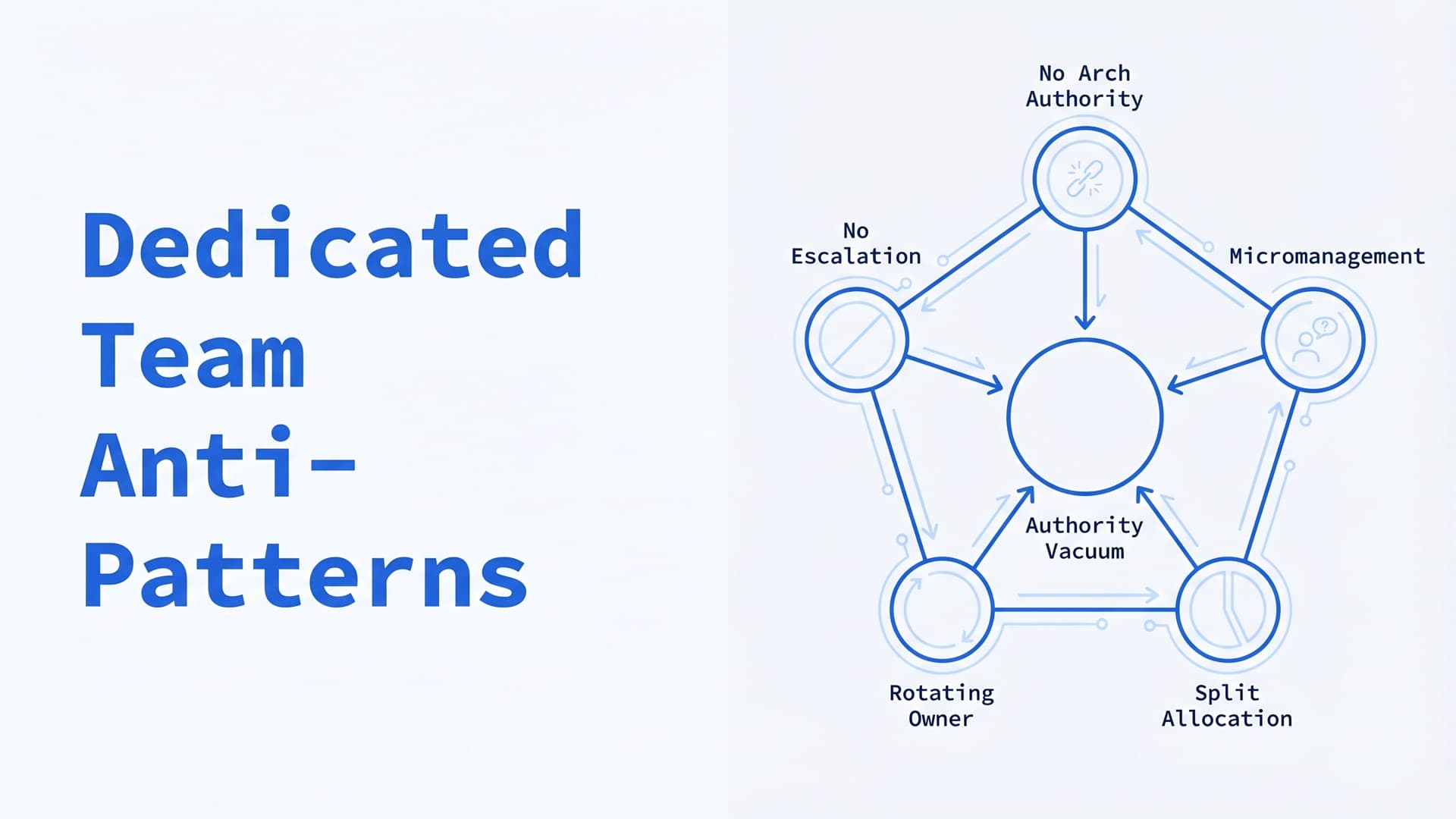
Dedicated Team Anti-Patterns: 5 Governance Failures That Kill Productivity
Five governance failures account for most dedicated team engagement failures — and none of them are about engineer quality. The Authority Vacuum, the five patterns it creates, and how to diagnose which one you have.
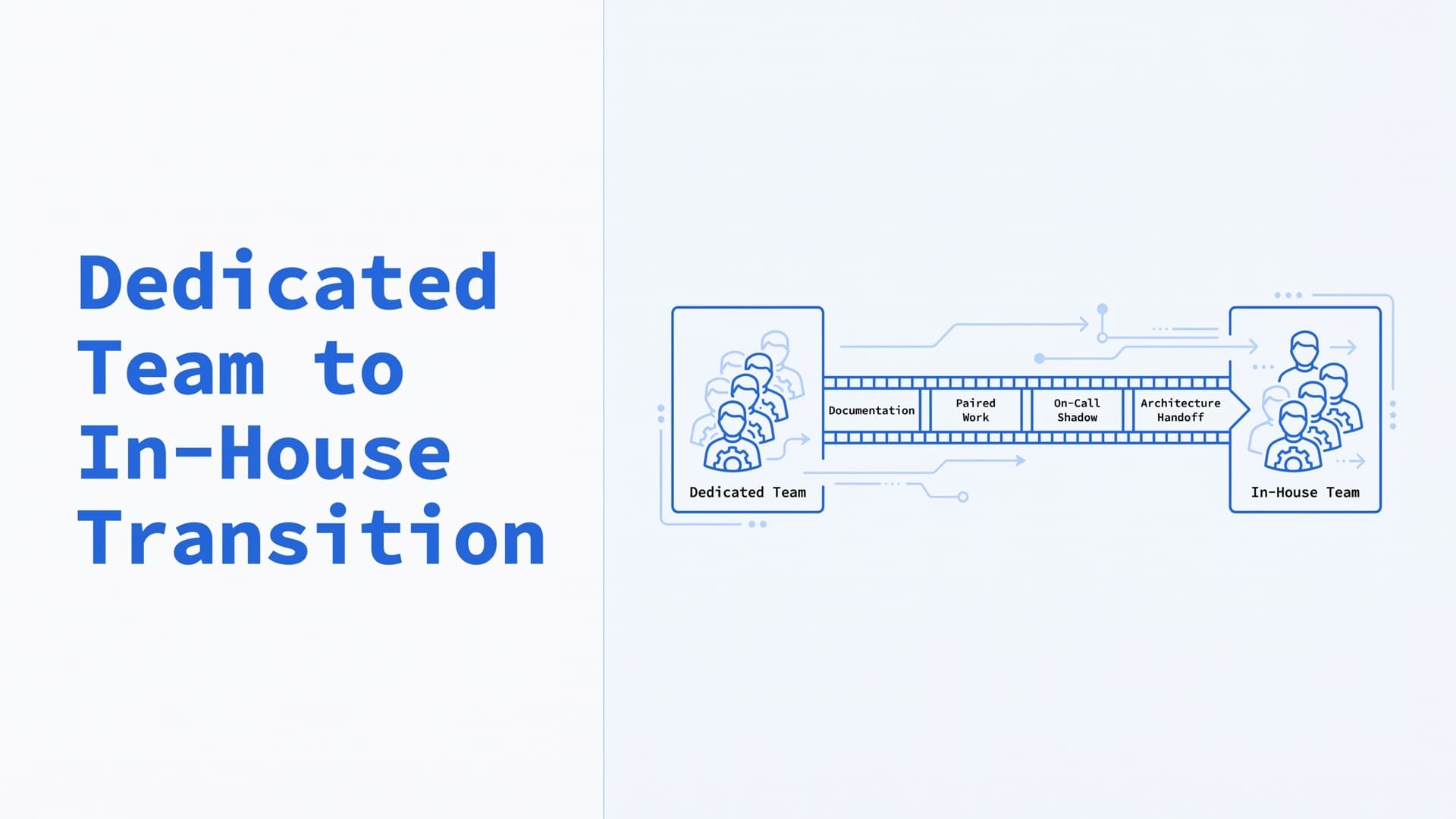
When to Bring a Dedicated Team In-House (And How to Do the Transition)
70% of executives have selectively insourced. The Knowledge Bridge is what separates successful transitions from expensive restarts. Signals, playbook, and the four failure modes that sabotage in-housing.
You might also need
Ready to talk?
No pitch deck. No sales team. You'll talk directly to an engineer who's done this before.